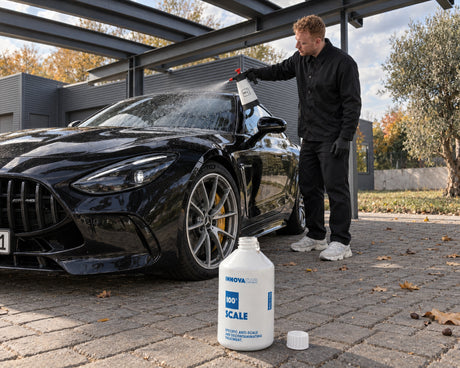
Togliere le macchie di calcare dai vetri dell'auto senza graffiarli
Daniel von Detailing1 |


Meguiars
Detailing Swabs tamponi detergenti per la cura auto
Tamponi in spugna per i punti difficili da raggiungere
Tampone detailing: i tamponi detailing arrivano nelle aperture piccole e nelle curve strette. Punta, materiale e lunghezza dello stelo dicono dove arrivi e quanto prodotto porti con te.
La scelta segue la superficie e il detergente; anche con un attrezzo fine la pressione va dosata.
Troppa scelta in Tampone detailing? Fatti aiutare a scegliere:
Detailing swabs are sticks with soft foam tips for areas that a cloth cannot reach: switch gaps, air vents, emblems, and body seams. They pick up dust and residue and apply care products with pinpoint accuracy. The Meguiar's Detailing Swabs come in a pack of 20, containing ten large and ten small tips.
The material. Wound cotton can lose fibers on rough edges, slats, and grained plastic, which then get stuck in the gaps. Foam does not shed fibers, absorbs liquid, and releases it in a controlled manner when pressed. On smooth plastic, a cotton swab is sufficient, but in textured gaps and air vent slats, the foam swab works more cleanly.
Yes. The manufacturer specifies that Meguiar's Detailing Swabs are washable and reusable as long as the tip is functional. After use, wash them with water and a little mild cleaner and let them dry. Discard torn tips, and do not use swabs previously used on the exterior body on interior switches or display frames.
With a dampened rather than a dry swab: Moisten the tip with a Quick Detailer, pull it along the edge in one direction, and wipe it off on a cloth after each pass. Used dry, the foam only pushes the residue back and forth. Before your next polish, use masking tape to protect emblems and seams.
On switches and display frames, yes, as long as the liquid stays in the tip; clean the display surface itself with a soft cloth. Never spray cleaner directly onto switches or displays, but rather onto a cloth and dampen the tip on it until it is moist but not wet. You can find suitable cleaners for plastic and displays in our interior cleaning section.
If dust is dry and loose in slats or seams, the brush is faster: it loosens the dust so the vacuum can pick it up. When residue is stuck or you need to apply care products into a crevice, use the swab because it absorbs and applies precisely. You can find brushes for every surface among our detailing brushes.
Daniel von Detailing1 |

Daniel von Detailing1 |

Daniel von Detailing1 |

Daniel von Detailing1 |

Jasper von Detailing1 |

Daniel von Detailing1 |

Daniel von Detailing1 |

Daniel von Detailing1 |

Jasper von Detailing1 |

Jasper von Detailing1 |

Daniel von Detailing1 |

Daniel von Detailing1 |