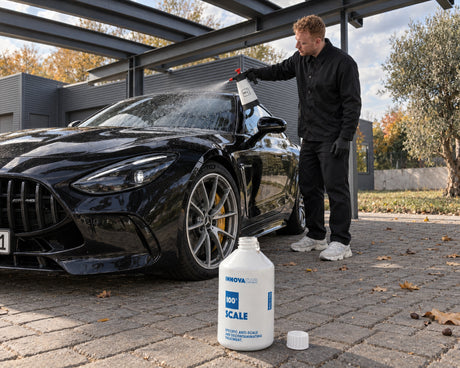
Togliere le macchie di calcare dai vetri dell'auto senza graffiarli
Daniel von Detailing1 |


Dr. Wack "A1" A1 Cabrio "Verdeck-Imprägnierer" Impermeabilizzante tessuti - 400 ml ...è stato ordinato al fornitore e verrà spedito non appena sarà di nuovo disponibile.
— Hurry up while stocks last, delivery time 2-8 days
Articolo aggiunto al carrello.
Visualizza carrello


Hai domande o ti serve aiuto?
Siamo sicuri che la nostra pagina di aiuto ti sarà utile. Lì trovi come contattarci e le risposte alle domande più frequenti.
Non hai trovato quello che cercavi? Scrivici in chat.
Fast international shipping to the USA and Canada with FedEx, USPS or UPS, delivery time 2-8 days. Prices exclude duties and taxes. Import charges are collected on delivery.
All shipping methods, rates and weight tiers are listed in our shipping policy.
Negozio di cura auto a Nordhorn
Perché aspettare, se si può fare in fretta? Ordina online da noi i tuoi prodotti per la cura dell'auto e scegli il comodo ritiro o la nostra consegna lampo, in zona o in tutta Europa. Puntiamo a darti la massima flessibilità e comodità, perché la tua auto resti sempre in gran forma.
Il tuo ordine lo puoi ritirare sempre dal martedì al venerdì, dalle 10:00 alle 17:00, da Detailing1 in Bosinks Kamp 8, 48531 Nordhorn. Tieni a portata di mano la conferma di ritiro. Ti aspettiamo!
Non è stato possibile caricare la disponibilità per il ritiro

What is the Dr. Wack A1 Cabrio "Convertible Top Waterproofer"? A 400 ml aerosol waterproofing spray for textile convertible tops made of cotton blends, acrylic, or Dralon. It does not clean, it does not re-dye, and it is explicitly not intended for tops made of soft PVC, vinyl, or synthetic leather.
Dr. Wack A1 Cabrio "Convertible Top Waterproofer" is a textile waterproofing agent from Dr. Wack that coats individual threads rather than forming a skin over the fabric. The manufacturer describes it as follows: the active ingredients wrap around each fiber and, as they dry, stand upright like many tiny umbrellas side by side. The fabric remains open between these umbrellas.
That is the whole difference between waterproofing and sealing. A tarp holds back water because it has no holes. A waterproofed convertible top holds back water because the water no longer wants to wet the fiber: it contracts into a bead with a surface tension of about 72 mN/m and finds no hold to spread out on the low-energy fiber surface.
For you, this means: the gaps in the fabric remain open, allowing air and water vapor to continue passing through. A top that is instead covered with a closed film may keep the rain out, but it also traps moisture inside. Anyone who has ever slept under a plastic tarp knows the result.
Expert tip from Detailing1: From our experience, one specific process primarily costs you performance: spraying the top in the sun because it dries faster there. Dr. Wack writes the exact opposite in its own care tips. It should be sprayed in a cool, shaded area. Only when the top is well-ventilated should the car be moved into the sun, as the heat facilitates the standing up of the active ingredients. Application takes less than 10 minutes per layer. The sun does the actual work afterward.
Shake the can, spray thinly and evenly from a distance of about 20 centimeters, let it flash off, then apply a second thin layer, taking care not to go over already treated areas intentionally.
The reason lies in the mechanics. The active ingredients need to stand up while drying, and for that, they need space and air at the fiber level. Anyone who saturates the surface until it shines causes the product to clump together instead of standing up. Dr. Wack frames this as a prohibition: avoid soaking the sprayed surfaces; it is better to spray thinly several times and allow the product time to dry in between.
Before the first spray, it is decided whether it will hold at all. The top must be clean and completely dry; otherwise, the waterproofing will sit on the dirt instead of the fiber. Surfactant residues are even more treacherous than dirt: the manufacturer explicitly writes that detergent residues prevent any waterproofing effect. After using the Convertible Top Cleaner, rinse until the runoff water remains clear and no white bubbles form anywhere. Afterward, the fabric needs time to dry thoroughly down to the underlayer.
Everything that is not textile must be covered. According to the manufacturer, glass, plastic windows, and paint surfaces should neither be sprayed nor exposed to spray mist. A strip of masking tape along the edge of the top and an old sheet over the rear window are sufficient. Work outdoors in the shade, not on a heated surface or in direct sunlight.
The sequence on the surface itself is unspectacular but important: work in strips, overlapping, from one side to the other. A top is an inclined surface, and a spray jet that dwells on one spot for too long will accumulate into a trickle. Evenly here means: at a constant speed, a constant 20 cm distance, and no dwelling.
According to the manufacturer, this product is not suitable for tops made of soft PVC, vinyl, or synthetic leather; a plastic deep-care product should be used there instead. This is not a matter of preference, but a matter of material.
Soft PVC has no fibers to coat. It is a solid layer that consists of about 40 percent plasticizers, which keep the plastic elastic. If these escape due to UV radiation and weathering, the material becomes brittle and the embedded pigments are destroyed. A vinyl top therefore needs a replenishment of plasticizers, not a water repellent. This is exactly what the Plastic Deep-Care Agent provides.
The test for this is tactile and takes five seconds. If the top feels like fabric, with a visible weave structure and a rough, soft surface, it is textile and this spray is the right choice. If it feels like a smooth, closed film, you are dealing with soft PVC.
The second limit concerns color. The integrated UV protection prevents fading of the top fabric with regular use, but it does not reverse existing fading. Whatever pigment was lost on the sunny side over five summers remains lost. The spray secures today's condition; it cannot buy back what was lost yesterday.
And a note regarding the formulation: repelling oil without fluorine chemistry is the harder part of this task, as fluorine compounds were the easy way for decades. The fact that today's formula is, according to Dr. Wack, free of PFAS and still led in oil repellency in lab tests is the result of the work done in Baar-Ebenhausen.
Modern top fabrics come waterproofed from the factory, and as long as raindrops remain as beads on them, you simply do not need this can yet.
It is needed where the elements are constantly pressing on the fabric: for a convertible that stays outside or under trees, for a year-round vehicle, or for a car without a garage during the winter. Top fabrics like the three-layer Sonnenland material with Dralon outer fabric, which BMW, Mercedes, and Porsche install as standard, last for many years like new. But you only get those years with proper care.
Anyone who regularly takes their convertible through a car wash should not confuse things: a wax program there is a paint product and works on a smooth, closed surface. A textile top is the opposite of that, and it remains just as unprotected after the wash as it was when it went in.
One 400 ml can covers more than one top. Because the same can is approved for awnings, tents, and textile clothing, the rest won't end up on the shelf, but on the patio awning. If you are looking for the right products for the complete process, you will find cleaners and waterproofers side by side in the Convertible Top Care section.
The question remains when to reapply, and the top itself answers that. There is an intermediate stage between "holding" and "no longer holding," and that is your actual deadline. Freshly waterproofed, the droplets sit as round beads on the fabric; that is beading.
When the effect wears off, the beads fall flat and run off as a continuous film. The scene calls this "sheeting," and on a convertible top, it is a yellow card. Only after that comes the dark, matte spot that remains, which means: the water is sitting inside the fiber.
The difference between the two points in time is a whole extra step. Those who reapply during sheeting spray onto a clean, dry top and are done in half an hour. Those who wait until the dark spot appears must clean it again first, thus introducing exactly the mechanical stress to the fabric that the waterproofing was supposed to save it from in the first place.
Dubbi su Dr. Wack "A1" A1 Cabrio "Verdeck-Imprägnierer" Impermeabilizzante tessuti? Fatti spiegare:
A textile waterproofing agent from Dr. Wack in a 400 ml spray can for convertible tops made of cotton blends, acrylic, or Dralon. The active ingredients coat every single fiber and stand upright during the drying process, rather than forming a film over the fabric. This allows the convertible top to remain water-repellent while still being breathable.
Clean the top, rinse until the water runs clear, and allow to dry thoroughly down to the underlayer. Cover glass, plastic windows, and paintwork, and work in the shade. Shake the can, spray thinly and evenly from a distance of about 20 cm, and avoid soaking the material. Allow to flash off, apply a second thin layer, then place the car in a warm, sunny spot.
Convertible top fabrics come treated from the factory, but rain, wind, and UV radiation wear this protection away until the water-repellent effect is lost and the fabric fades. Re-waterproofing replaces this protection and adds an oil- and dirt-repellent layer, which saves the top from mechanical cleaning cycles.
No, only for textile tops. According to Dr. Wack, it is not suitable for soft PVC, vinyl, or synthetic leather; those surfaces require the Plastic Deep Care product, as such tops require plasticizers rather than water repellency. The spray is also approved for use on awnings, tents, and textile clothing.
Both will reduce the effectiveness. The active ingredients need to stand up along the fiber while drying; if the surface is soaked, they will clump together. Dr. Wack therefore advises several thin applications with drying intervals and states not to apply in direct sunlight or on heated surfaces.
Not according to a set interval, but based on how the water behaves. As long as drops stand as round beads, the protection is still intact. Once they run off flat as a film, it is the right time to reapply. Only when dark, matte patches remain is the water sitting in the fiber, and you must clean it again before waterproofing.
Clean the soft top before impregnation and rinse until the runoff water remains clear and no more white bubbles form. According to Dr. Wack, cleaning agent residues prevent the impregnation from taking effect. The fabric must then dry through to the base layer, not just dry off on the surface. Therefore, it is better to plan for two days rather than one for the soft top cleaner and the subsequent impregnation.
Mask off glass and plastic windows and cover the adjacent painted surfaces. The manufacturer specifies that these areas should neither be sprayed nor exposed to spray mist. For this purpose, park the vehicle outdoors in the shade. The soft top surface must not be heated, and you should not even start in direct sunlight.
Shake the can and spray thinly and evenly from a distance of about 20 centimeters. Work through in overlapping strips, moving at a constant speed and maintaining an equal distance without lingering on any one spot. The surface should be evenly coated, not wet and glossy: soaking the sprayed areas must be strictly avoided.
Allow the first layer to flash off and then apply a second thin layer. When doing so, deliberately avoid going over areas that are already impregnated. Two thin passes with a break in between are more effective than one heavy one, as the active ingredients need to stand upright while drying and require air at the fiber for this to happen.
Let the soft top air out in a shaded place. As soon as it is well ventilated, move the car to a warm, sunny spot. The heat facilitates and accelerates the upright alignment of the active ingredients, providing you with better results without having to buy more products.
Notes: This product is not suitable for soft tops made of soft PVC, vinyl, or synthetic leather; the plastic deep cleaner should be used there. The UV protection prevents further fading with regular use, but it does not restore color that has already been lost. Re-impregnation should not be based on a calendar, but as soon as the drops no longer bead up but run off as a flat film. The same can is also approved for awnings, tents, and textile clothing. Store upright, cool, and not in a heated vehicle.
Informazioni di sicurezza per Dr. Wack "A1" A1 Cabrio "Verdeck-Imprägnierer" Impermeabilizzante tessuti
Consentito ai privati
Questo prodotto, contrassegnato come «Consentito ai privati», è imballato, dichiarato, registrato e certificato per i privati secondo la legislazione tedesca. Rispetta le indicazioni di pericolo e i consigli di prudenza.
Pericolo

Infiammabile

Nocivo

Pericoloso per l’ambiente acquatico
| Aerosol altamente infiammabile. | H222 |
| Contenitore pressurizzato: può esplodere se riscaldato. | H229 |
| Provoca irritazione cutanea. | H315 |
| Può provocare sonnolenza o vertigini. | H336 |
| Tossico per gli organismi acquatici con effetti di lunga durata. | H411 |
| In caso di consultazione di un medico, tenere a disposizione il contenitore o l'etichetta del prodotto. | P101 |
| Tenere fuori dalla portata dei bambini. | P102 |
| Tenere lontano da fonti di calore, superfici riscaldate, scintille, fiamme e altre fonti di innesco. Vietato fumare. | P210 |
| Non perforare né bruciare, neppure dopo l’uso. | P251 |
| Non vaporizzare su una fiamma libera o altra fonte di accensione. | P211 |
| Utilizzare soltanto all’aperto o in luogo ben ventilato. | P271 |
| Non respirare la polvere/i fumi/i gas/la nebbia/i vapori/gli aerosol. | P260 |
| Proteggere dai raggi solari. Non esporre a temperature superiori a 50 °C/122 °F. | P410+P412 |
| Smaltire il contenuto/recipiente in un impianto di smaltimento autorizzato. | P501 |
Contenuto di COV
26.61% — quota di composti organici volatili.
Queste informazioni sul prodotto hanno solo valore di consulenza non vincolante. Non ne deriva alcuna responsabilità da parte nostra. Verifica che il prodotto sia adatto al tuo impiego. Prima dell’uso verifica idoneità e compatibilità. Siamo a tua disposizione per una consulenza.
Domande su queste informazioni?
Contatti
Dr. O.K. Wack Chemie GmbH
Untere Au 9, 85107 Baar-Ebenhausen, Deutschland
+49845341995100
info@dr-wack.com
https://dr-wack.com/
Scegli tra tanti metodi di pagamento come PayPal, Klarna, Apple Pay, Mastercard o Visa e approfitta del pagamento con fattura e del pagamento a rate. I tuoi dati di pagamento sono sempre trattati in modo sicuro. Domande sul pagamento?
Your order reaches you in 2-8 days with FedEx, USPS or UPS. Prices exclude duties and taxes. Import charges are collected on delivery. Questions about shipping?
Daniel von Detailing1 |

Daniel von Detailing1 |

Daniel von Detailing1 |

Daniel von Detailing1 |

Jasper von Detailing1 |

Daniel von Detailing1 |

Daniel von Detailing1 |

Daniel von Detailing1 |

Jasper von Detailing1 |

Jasper von Detailing1 |

Daniel von Detailing1 |

Daniel von Detailing1 |