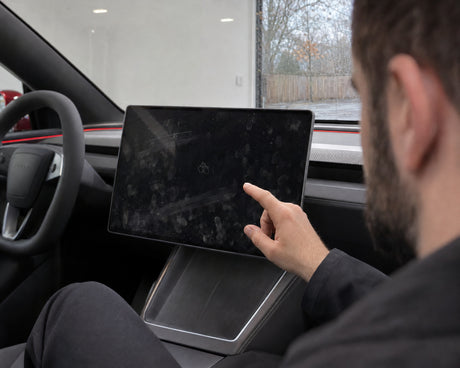
Clean a Tesla screen: what the Model Y touchscreen can take
Daniel von Detailing1 |


FLEX
"PXE 80 12-EC" Cordless Random Orbital Polisher Ø80mm (12V)
12V Cordless Polisher Ø80mm with Replaceable DT Adapter


FLEX
"XCE 2 8 14-EC C" 8mm Dual-Action Polisher with Forced Rotation Ø150mm
Forced Rotation Polisher for Precise Paint Correction


FLEX
FLEX "XFE 2 15 14-EC C" 15mm Random Orbital Polisher with Free Spin Ø150mm
Professional orbital polisher for a hologram-free finish
FLEX
"XFE 2 15 18-EC" 15mm Cordless Random Orbital Polisher, Free-Spin Ø150mm (18V)
Cordless DA polisher for a perfect pro paint finish


FLEX
FLEX "XCE 2 8 18-EC" 8mm Cordless Forced-Rotation Orbital Polisher Ø150mm (18V)
Cordless forced-rotation DA polisher for efficient pro correction

Rupes
BigFoot "LHR15" Mark V 15mm Random Orbital Polisher Ø125mm
Precise and quiet thanks to innovative technology

Rupes
BigFoot "LHR21" Mark V 21mm Dual Action Polisher Ø150mm
Ergonomic design and innovative technology

Rupes
BigFoot Mille "LK900E" 16mm Gear-Driven Orbital Polisher Ø125mm+Ø150mm
Forced Rotation Random Orbital Polisher for Professional Detailers

Rupes
BigFoot Mini "LHR75E" 12mm Random Orbital Polisher Ø75mm
Compact and precise eccentric polishing machine for small areas

Rupes
BigFoot Duetto "LHR12E" 12mm random orbital polisher Ø125mm
Efficient 12mm Dual Action Polisher for Paint Correction

Rupes
BigFoot "LHR21ES" 21mm Random Orbital Polisher Ø150mm
Professional polishing results thanks to large stroke

Rupes
BigFoot "LHR15ES" 15mm Random Orbital Polisher Ø125mm
Eccentric polisher with ergonomic design and high cutting power
A dual-action polisher supports machine paint care when its movement, backing plate, pad and polish work together. Compare free-spinning and forced rotation first, then the surfaces you will work on and your power supply. A larger throw alone determines neither the result nor the right machine.
A dual-action polisher combines an eccentric movement of the backing plate with additional rotation. That rotation can arise freely or be driven through gearing. This distinguishes it from a purely rotary polisher. Your choice therefore involves not just throw and plate diameter, but also the drive type and approved accessories. See polishing machines for an overview of other designs.
Practical tip from Detailing1: Plan regular pad checks when using the 15 mm free-spinning polisher. The FLEX instructions warn that heat can also wear the core. Check condition, attachment and running true before use. Use a separate pad for each polishing compound so you can properly assess the combination you have chosen.
A free-spinning dual-action polisher lets friction influence the additional plate rotation, while a forced-rotation machine drives that rotation through gearing and combines it with the eccentric movement.
With a free-spinning design, the plate follows its eccentric path and can simultaneously rotate around its own axis. RUPES describes this principle as having friction-dependent rotation. If contact strongly slows that rotation, the eccentric movement continues. A slowing plate is therefore not automatic protection against paint damage.
A forced-rotation machine mechanically couples the additional rotation. An extra gear mechanism does this on the FLEX XCE. This design differs from a free-spinning machine even when both have the same plate size. Compare the movement mechanism first and individual specification figures afterwards. A smaller throw with a different drive does not automatically mean less effect.
The subcategories free-spinning dual-action polishers and forced-rotation dual-action polishers help you make this initial selection. The next step always involves the specific model. Accessory mounting, controls and working instructions can vary within a design type. A category name alone is therefore no reason to transfer one machine's instructions to another.
A purely rotary polisher turns the pad around a central axis. If that is the movement you want for your process, compare the rotary polishers. The guide to dual-action and rotary polishing complements the selection when choosing between the two principles. On the vehicle, the combination of tool, polish and paint remains decisive.
For beginners, a clear working process matters more than a supposed machine safety promise. Plan a small test spot, suitable lighting and time for inspection. If you can maintain the movement you want only by adding pressure, check the combination and technique instead of treating resistance as proof of correct use.
Throw describes the eccentric movement, while the backing plate supports the pad; both dimensions must suit the machine and the shape of the area being worked.
A useful comparison is a 15 mm throw paired with different plate sizes. RUPES lists a 125 mm backing plate for the LHR15ES; the FLEX XFE 2 15 18-EC is specified for a maximum of 150 mm. The same throw therefore does not imply the same working area. Check which component each dimension refers to when comparing machines.
The backing plate is also different from the pad attached to it. For the large FLEX, the manual lists 125 and 150 mm plates and polishing tools up to 160 mm. This is a model-specific limit. A pad does not become suitable because its diameter roughly matches a machine name or because its hook-and-loop backing sticks to some plate.
A broad, accessible panel allows different tool handling from a narrow recess. Before buying, assess the actual areas on your vehicle: wide door panels, curved transitions and small details have different space requirements. Do not force a large pad into a poorly supported area by improvising a tilted working position.
A search for a 75 mm dual-action polisher therefore concerns a separate tool size. For example, RUPES described the LHR75E with a 75 mm plate for smaller areas; the manufacturer now lists that model as discontinued. This does not authorise fitting any 75 mm plate to the large FLEX. Mounting, machine and accessory must be expressly compatible for such changes.
Check the attachment as well. FLEX offers specific damped plates for XFE and XCE machines. An M14 plate for a rotary polisher serves a different purpose and is not an arbitrary replacement. If you already own accessories, compare their exact part descriptions with the approval for your intended machine. Diameter alone is not enough.
A cordless dual-action polisher makes a useful addition when the power supply, charger and consumables are planned together; the machine alone is not a complete polishing setup ready for use.
The XFE 2 15 18-EC uses the FLEX 18 V system. If you already use it, first check which compatible batteries and charger you own. The bare-tool version is then a concrete option to compare. Similar-looking contacts do not automatically make a different voltage or another brand's battery compatible.
If you are building the power supply from scratch, compare the FLEX XFE 2 15 18-EC set with batteries and charger. Check what is actually included in the selected variant. Extra batteries change how you organise charging and working; they alter neither the throw nor the machine's fundamental polishing movement.
Plan your pad and polish separately. A supplied backing plate holds the working accessory; it is not a polishing sponge. Likewise, a set with a charger does not automatically include polish and cloths. Keeping these items distinct avoids being able to charge the machine while still lacking a matched set of materials for the first pass.
Assess weight with the complete combination too. The manufacturer's figure without a battery pack is a clear starting point, not the finished working weight. On a vertical door you hold and guide the whole machine. Grip position and access to the switch therefore belong in the comparison just as much as the specification figure.
Battery power offers a concrete advantage at a working location without an accessible socket. It does not establish a fixed number of fully polished vehicles per charge. Load, battery and working technique vary. Plan charging breaks around your actual equipment rather than comparing an unsupported runtime story with a clearly described package.
The right polish depends on paint condition, desired result and polishing pad; a small test spot shows whether the selected combination works for your particular task.
Start with the goal: do you want to address fine visible marks or refine the surface after an earlier correction step? A soft finishing sponge, intended for fine finishing, serves a different purpose from a tool for heavier removal. The product instructions must suit the intended machine movement and the relevant pad.
FLEX describes its black finishing sponge together with the black polish as part of its own system. That pairing helps within this product family. It is not a universal colour code: a black pad from another manufacturer may have a different firmness or purpose. Compare the actual description rather than choosing solely by a familiar shade.
Check the plate and pad before fitting them. The attachment must be clean and secure, and the tool must show no visible damage or abnormal running. Remove the battery from the cordless FLEX before changing accessories. Centre the pad and perform the specified test run according to the machine instructions before working on paint.
Choose a manageable test area and work it with the intended combination. Then remove residue as directed by the polish manufacturer and inspect the result under suitable lighting. Official RUPES training also describes this test-spot process. It answers a concrete question: does this combination suit this paint and this target?
If the result is unsuitable, do not change the machine, pad, polish and several settings at once. A targeted adjustment is easier to assess. FLEX specifies a separate tool for each polishing compound. Keep combinations separate and inspect pads during the work; accumulated residue means an initially suitable setup does not continue working in an unchanged condition.
The FLEX XFE 2 15 18-EC instructions specify two-handed guidance without additional pressure; a general speed recommendation does not replace these model-specific operating requirements.
Prepare the machine and working area first. Use a suitable, undamaged tool and follow the protective-equipment requirements in the machine and polish instructions. FLEX expressly calls for eye protection and both hands on the machine. Keep loose objects, clothing and cables away from the moving tool. Also make sure you can put the machine down in a controlled way.
The starting procedure is explicit for this FLEX model: switch on before placing it on the surface and let it reach the selected speed. Then guide it over the area in overlapping movements without additional pressure. Do not borrow a different starting sequence or pressure instruction from a video about another machine simply because both are called dual-action polishers.
The setting must match the machine, tool and polish. A particular number on another machine's dial does not automatically represent the same movement. Nor is a high no-load figure a recommendation for using it on every paint finish. Follow the specific instructions and assess the prepared test spot before extending the process to other areas.
Watch the tool's guidance and behaviour during work. Unusual vibration is not a signal to push the machine down harder and carry on unchanged. Interrupt the pass and, after stopping safely, check the attachment and condition. Running behaviour can change particularly after switching tools; FLEX specifies adapting the setting within the permitted application.
The polisher is also not an unrestricted substitute for a sander. The instructions for this XFE application exclude other forms of machining of that kind. A general online claim that eccentric machines can also sand does not approve this model for sanding. Choose the tool and machine for the described task before ordering further accessories.
After polishing, inspect the cleaned test area and the tool separately; visible gloss alone answers neither whether marks remain nor whether the pad is worn.
Remove polish residue according to that product's instructions and inspect the surface with a suitable light. Fine polishing marks, often called holograms, can be more or less visible depending on the lighting angle. Compare the result under useful inspection conditions. A reflective surface under soft room lighting is not yet a thorough assessment of the worked area.
Comparative tests likewise distinguish several qualities. In its dual-action test of June 2026, AUTO BILD assessed handling, running behaviour and build quality alongside the gloss result. The FLEX XFE 7-15 150 tested there is a different model from the XFE 2 15 18-EC. A verdict helps only when you identify the actual tested machine and the conditions.
After a working section, inspect the pad for residue and wear. Follow the cleaning instructions for that accessory and replace damaged tools. An exterior that still looks sound does not rule out damage to the foam core. Plan replacements rather than treating a good first impression as approval for unlimited further passes.
Switch the machine off after use and wait for it to stop completely before putting it down. Remove the FLEX battery for cleaning and maintenance. The instructions require regular cleaning of the ventilation areas and dust filter; clean the removed filter with dry compressed air. Do not immerse the power tool in water like a wash sponge.
Finally, decide the next step from the test spot. Once the goal is reached, another pass does not automatically add useful benefit. If marks remain, check the combination and its limits first. Useful feedback comes from the controlled inspection of the surface and a sound tool; more pressure or longer working are not reliable substitutes.
Too much choice in Dual action polishers? Get help picking:
Add Detailing1 as a preferred source on GoogleA dual-action polisher moves the plate eccentrically while also rotating it around its own axis. Friction influences that rotation on free-spinning machines; gearing drives it on forced-rotation models. Throw and plate diameter describe different properties. Use the machine with approved accessories and a polish suitable for the task.
Fit an approved, sound pad with the battery removed and follow the manual's test run. For the FLEX "XFE 2 15 18-EC": switch on before contact, allow it to reach the selected speed and guide with both hands in overlapping movements without extra pressure. After switching off, wait for a complete stop before putting it down.
That depends on the task, experience and matched tool. A rotary machine turns the pad around a central axis; a dual-action machine combines movements. Compare how they work rather than a blanket ranking. Surface shape, accessories and operating instructions also affect the choice. Even a free-spinning polisher is not automatic protection against paint damage.
Choose a polish intended for the specific machine movement and pair it with the described pad. Paint condition and the desired result determine the step. First test the combination on a small area and inspect it under suitable lighting. One particular pad colour has no universal meaning across all manufacturers.
There is no fixed speed for every machine, pad and paint finish. Follow the specific machine and polish instructions and test the chosen combination on a small area. Matching numbers on different dials do not automatically mean matching movements. Unusual vibration calls for inspection rather than simply adding more pressure.
Choose a machine with clear instructions, compatible accessories and a size you can control on your vehicle's surfaces. Plan a test spot and suitable inspection lighting. A cordless machine also needs an appropriate battery and charger. A beginner recommendation replaces neither the operating manual nor inspection of the actual paint result.
This procedure applies to the FLEX "XFE 2 15 18-EC" with approved accessories. It supplements the complete machine manual and the specific polish instructions; other models may operate differently.
Choose a polish suitable for the paintwork task and a pad expressly compatible with the FLEX XFE 2 15 18-EC. Follow the polish and vehicle instructions too. Prepare a small suitable area and lighting for inspection. Have the required protective equipment ready.
Remove the battery. Check the plate and pad for damage, wear and clean attachment. Fit the approved tool according to the instructions and centre the pad. Use separate pads for different compounds.
Insert the compatible battery and perform the prescribed test run following the machine manual. Do not continue using a tool that vibrates unusually or is damaged. Choose the setting according to the machine, tool and polish instructions; there is no universal dial position.
Apply the polish according to its instructions. Switch this FLEX machine on before placing it on the surface and let it reach the selected speed. Guide it with both hands in overlapping movements without additional pressure. Do not transfer pressure or starting instructions from another machine type.
Switch off and wait for a complete stop before putting the machine down. Remove polish residue as instructed and inspect the test spot under suitable lighting. Use the result to decide whether the combination suits the task or needs a targeted adjustment.
Remove the battery before changing accessories or cleaning. Check the pad for internal wear and abnormal running too, clean it according to its own instructions and replace damaged parts. Clean ventilation areas and the removed dust filter with dry compressed air as directed by FLEX. Put the machine down only when completely stopped.
Daniel von Detailing1 |

Daniel von Detailing1 |

Daniel von Detailing1 |

Daniel von Detailing1 |

Daniel von Detailing1 |


Daniel von Detailing1 |

Daniel von Detailing1 |

Daniel von Detailing1 |

Daniel von Detailing1 |

Daniel von Detailing1 |

Daniel von Detailing1 |