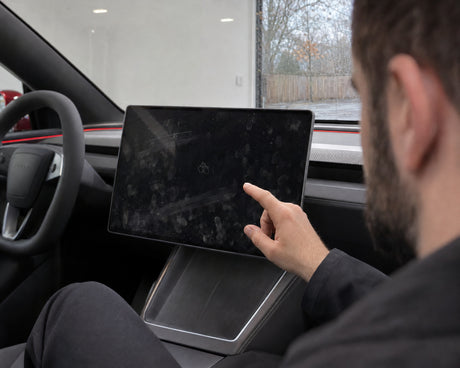
Clean a Tesla screen: what the Model Y touchscreen can take
Daniel von Detailing1 |


Koch-Chemie
Metal Polish "Mep" Metal Polish
Effective Metal Polish for Shine and Protection


SONAX
PROFILINE MetalPolish Metal Polish (Medium-Cut)
MetalPolish — Medium-Cut Metal Polish for High Gloss


Dr. Wack "P21S"
P21S "Metall-/ Alu-Polish" Metal Polish
Metal polish for alu, chrome and stainless — not for anodising


Meguiars
Metal Polish for Chrome, Aluminum & Stainless Steel, 6 oz (177 ml)

GYEON
Metal polish – chrome, stainless steel & aluminium back to high gloss
Medium cut for heat tint on exhausts, trim strips and aluminium.


CarPro
"MetalliCut" Metal-Polishing-Compound Metal Polish
Fast and effective metal polish with a high-gloss finish
D-CON
Chrome & Metal Polish Metal Politur
Chrome and metal polish for brilliant shine


Soft99
Brilliant, effective care of chrome parts made easy


Dr. Wack "S100"
"S100" metal polish for motorbikes
Essential high-gloss polish for motorcycle metal parts
What does metal polish do? It removes surface tarnish and smooths suitable metal surfaces. The material and its coating are what matter. Bare aluminium needs a different product from certain chrome parts. Polish cannot repair missing chrome plating or deep rust pitting.
Metal polish contains fine abrasives for use on suitable metal surfaces. As you work it, it removes surface deterioration and smooths the metal so that it reflects light more evenly. This can restore the shine to tarnished stainless steel or intact chrome parts. Whether the product suits your part also depends on clear coat, anodising and the finish you want. A matt surface needs different care from a high-gloss finish.
Detailing1's tip: With an exhaust tip, first check whether the grey deposit is still there after a suitable clean. Thorough cleaning beforehand means you will not be working dirt into the surface with the polish. Use a fresh cloth for the final wipe-down and inspect the dry metal under the same lighting. A smeary surface will not give you a reliable view of the finish.
A clean exhaust can still look dull because oxidation and fine irregularities scatter the light; polish tackles precisely these changes at the surface.
Start with one simple distinction: is there still dirt on the part, or has the metal itself changed? Soot, road grime and stubborn residues need cleaning off first. If a haze remains on a suitable, smooth metal surface, polishing is worth considering. Following this order saves you from removing material unnecessarily.
Fine abrasives remove material from the surface as you work the product. This removes surface tarnish and allows a more even reflection. How much the finish improves depends on the starting condition. A lightly tarnished trim piece and an exhaust tip neglected for years will need different amounts of work, and not necessarily the same polish.
Deep rust pitting marks the limit. You can brighten the surrounding area, but polishing will not bring back missing metal. Nor will it fill a gap in flaking chrome plating. Do not keep working more aggressively just because a pit remains visible. That removes more material without fixing the underlying problem.
A case from our alloy wheel guide shows the limit: the faces of a set of winter wheels looked immaculate, yet white corrosion marks were already visible inside the barrels. You therefore need to check the whole wheel before deciding to polish it. If the coating is damaged, bringing the visible surface to a shine is not enough. Polishing the surface cannot replace missing paint or repair damage underneath.
Signs of use do not all have to disappear. On an older vehicle, a clean, even-looking metal part may suit it better than a forced mirror finish. Before you start, decide whether you want to remove a haze or freshen up an already shiny surface. That gives you a clear stopping point and prevents a small care job from turning into an unnecessary restoration project.
For an intact, glossy part, the recommendation is straightforward: clean it, polish it carefully with a suitable product, then inspect it once the residue is wiped away. With flaking chrome or deep rust, assessing the condition of the part is the useful next step. A stronger paste cannot replace a repair or fresh plating.
An alloy wheel is not automatically a bare aluminium surface; clear coat and anodising change what you are actually touching and which care products belong on it.
You can polish bare aluminium with a product specifically intended for it. If it has a clear coat, you are working on a paint layer first. Anodised aluminium, in turn, has a deliberately created oxide layer. These differences matter more than the general label of alloy wheel or aluminium trim. Checking the information for the part helps you avoid reaching for the wrong tube.
Koch-Chemie Metal Polish "Mep" metal polish is not an option for aluminium. Koch-Chemie explicitly excludes this material and anodised trim. For suitable aluminium surfaces, you can instead choose Dr. Wack P21S "Metall-/ Alu-Polish" metal polish or SONAX PROFILINE MetalPolish metal polish (Medium-Cut). Which makes more sense also depends on hand or machine application and whether you want protection after polishing.
With P21S "Metall-/ Alu-Polish", it pays to read the instructions closely: Dr. Wack lists both unpainted and painted metal parts, provided they are not anodised. Painted surfaces should be polished with little force. SONAX PROFILINE MetalPolish, on the other hand, excludes coated metal parts. This exception belongs to the specific product; it does not automatically apply to every polish on the shelf.
Chrome needs the same attention. Chrome-plated metal trim and plastic with a shiny coating can look alike. P21S "Metall-/ Alu-Polish" and SONAX PROFILINE MetalPolish exclude chrome-plated and metallised plastic parts respectively. Our chrome polish range focuses on that narrower application; the material information still matters there.
Brushed stainless steel, matt metal parts and anodised surfaces are not candidates for an indiscriminate high-gloss treatment. Even a small shiny patch can visibly alter the intended texture. If you want to keep the original finish, stick to cleaning and care designed for it. That is a better choice than polishing one spot until the surrounding surface no longer matches.
More cutting power only helps if the surface can tolerate the material removal; on thin layers, edges and deliberately matt surfaces, it can make the result worse.
Choose by material and condition first, then by the tool. Hand polishing gives you good control on a small chrome detail: you can reach curves precisely and see exactly where you are working. A machine may make sense on a larger, smooth surface. The polish you choose must have specific instructions for that method.
In a customer chat, someone asked how Koch-Chemie Metal Polish "Mep" differs from other polishes. To make that choice, start with the part: ranking products by cutting power is of little use if the product excludes aluminium. Compare material suitability and application methods before choosing between brands.
The tool plays a part in the result. A microfibre cloth, polishing wadding and a machine pad work differently on metal. Koch-Chemie specifies a microfibre cloth and light pressure for Metal Polish "Mep". Dr. Wack calls for polishing wadding with P21S "Metall-/ Alu-Polish". Start with the specified combination before trying more pressure or a different tool.
For machine application, SONAX lists medium foam pads or lambswool pads and low speeds. That does not translate into one universal setting for every machine. Follow the product instructions and keep an eye on edges, curves and the surface itself. A large attachment usually gives you less control on a narrow trim strip than careful hand polishing.
Look at the step after polishing too. Dr. Wack describes protection against weathering and renewed corrosion for P21S "Metall-/ Alu-Polish". The manufacturer gives no fixed durability period. Do not plan around a set number of weeks or washes. What matters is whether the product suits the material and whether its finish fits your care routine afterwards.
Dirt left in the cloth makes the work harder to control and can affect adjacent surfaces; start on clean, dry metal that has cooled completely, rather than straight after driving.
Clean the part with a product suited to the material and remove the residue thoroughly. An exhaust tip must be completely cold. Dry the surface and inspect it in good light. Before polishing, you can then see whether you are dealing with a haze, a rough patch or an already damaged coating.
Start on a small, inconspicuous spot with a little product and the specified cloth or applicator. Work the area as instructed, wipe away all residue and inspect the dry result. Only that result tells you whether the process suits your part. More paste on the cloth is no substitute for this check.
Then work in manageable sections. On an exhaust tip or trim piece, this makes contact easier to control than hurriedly spreading polish over the entire part. Keep adjacent paintwork clean and do not wipe metal residue onto it. Have fresh polishing cloths ready for the final wipe-down, alongside the cloths used to work the product.
Residue removal depends on the product. Dr. Wack says to let P21S "Metall-/ Alu-Polish" dry briefly after polishing before wiping it away. Other products may follow a different process. There is no universal dwell time here. Leaving polish on for longer just because a cleaner sometimes needs time to work will not automatically improve the result.
Only machine-polish with a product intended for it and a suitable attachment. In this selection, SONAX PROFILINE MetalPolish is the relevant option. Suitable polishing accessories help you choose the right tool. A larger machine is no advantage on a small, awkward part if it makes contact with the surface harder to control.
Finish by removing all residue and comparing the metal with its original condition under the same lighting. Once you have the finish you want, you are done. If a deep defect remains visible, stop chasing it with ever more pressure. Prepare and apply any additional protection according to its own instructions, provided it is suitable for the part.
Sales figures do not make a product suitable for every metal; our highlighted choice for suitable chrome surfaces therefore comes with a clear restriction on aluminium.
Koch-Chemie Metal Polish "Mep" is our starting point for suitable metal and chrome parts. In the sales overview we analysed for the past 90 days, it leads this selection. That supports its prominent place here, but does not replace a material check. For bare aluminium, we specifically recommend one of the suitable alternatives in the comparison.
| Product | Suitable for | Application | Key limitation |
|---|---|---|---|
| Koch-Chemie Metal Polish "Mep" | Suitable metal and chrome surfaces; our highlighted starting point for this application | By hand with a microfibre cloth and light pressure | Not for aluminium or anodised trim |
| Dr. Wack P21S "Metall-/ Alu-Polish" | Suitable, non-anodised metal parts, including aluminium; with protection described by the manufacturer | With polishing wadding; allow to dry briefly, then wipe clean | No chrome-plated plastic; painted surfaces only as instructed, using little force |
| SONAX PROFILINE MetalPolish | Suitable bare metal surfaces, including aluminium, brass, chrome and stainless steel | Medium cut; by hand or machine | No coated or rough metal parts and no metallised plastic |
For aluminium and hand application with the protection described by Dr. Wack, P21S "Metall-/ Alu-Polish" is the targeted alternative. For suitable bare metal surfaces that you also want to machine-polish, put SONAX PROFILINE MetalPolish on your shortlist. The difference lies in the intended application, not in one overall winner across every material.
Tube size comes after the material question. Occasional care for a small trim piece and regular work on larger metal surfaces call for different amounts of product. You cannot turn that into a fixed number of cars per tube. Area, condition and technique affect consumption too much. Choose the right product first, then the quantity you need.
A popular product can be the wrong choice on the wrong material; start with the part and use the comparison to choose for your specific process.
For intact chrome on metal and a manageable hand-polishing job, Koch-Chemie Metal Polish "Mep" is the first product we look at. That fits its highlighted role in this selection. For aluminium, cross it straight off the list. You need a product that explicitly lists that material among its applications, rather than one with a similar-looking label.
For polishing suitable, non-anodised aluminium by hand, Dr. Wack P21S "Metall-/ Alu-Polish" is a clear option. If you also want to use a machine, take a look at SONAX PROFILINE MetalPolish. If the metal is painted, the specific product instructions decide: P21S includes the exception described above, while SONAX excludes coated metal parts. That distinction can save you buying the wrong product.
SONAX PROFILINE MetalPolish is an option for a smooth, bare stainless steel exhaust tip, provided its construction and condition are suitable. Remove the dirt first and let the part cool completely. Do not simply carry this process over to rough, coated or deliberately matt surfaces. First establish which finish you want to preserve and which care method is intended for it.
If you already have a suitable polish at home, you do not need another product for the same job. Check its material guidance, application instructions and condition. If it is not suitable for your part, changing products makes sense. That keeps your kit manageable, with each product doing a job you actually need.
The right end point is a clean surface with the shine you want. Metal polish must suit the material; removing as much material as possible is not a goal in itself. Once the dry result looks right, put the cloth down. For matt or damaged parts, different care or restoration is a better choice than another pass with more pressure.
Too much choice in Metal polish? Get help picking:
Add Detailing1 as a preferred source on GoogleMetal polish contains fine abrasives for suitable metal surfaces. It removes surface tarnish and smooths the metal so that it reflects light more evenly again. The material and coating must suit the product you choose. It cannot repair missing chrome plating or deep rust pitting.
For bare aluminium, you need a specifically suitable product, such as Dr. Wack P21S "Metall-/ Alu-Polish" or SONAX PROFILINE MetalPolish. Clean the part, let it cool and start on a small, inconspicuous spot. First check for clear coat or anodising. Follow the product instructions for the tool, pressure and residue removal.
Chrome polish is intended for particular chrome surfaces. The broader category also covers other metals, depending on the product. The name alone tells you neither how abrasive the product is nor whether it suits your part. It also matters whether the chrome plating is on metal or plastic, and whether it is intact.
You can freshen up intact chrome on metal with a suitable polish. Koch-Chemie Metal Polish "Mep" is intended for suitable metal and chrome surfaces, but excludes aluminium and anodised trim. Check the construction of the part first. Chrome-plated plastic needs a product specifically suitable for it; polishing will not remove flaking chrome or deep pits.
Dr. Wack also allows P21S "Metall-/ Alu-Polish" on painted, non-anodised metal parts with little force. SONAX PROFILINE MetalPolish excludes coated metal parts, and Koch-Chemie Metal Polish "Mep" excludes aluminium entirely. Do not apply this exception to other products. For anodised surfaces or a deliberately matt finish, choose care designed for that surface.
Polish according to condition, not a fixed calendar: if cleaning is enough and the finish looks right, you do not need to remove more material. Dr. Wack describes added protection for P21S "Metall-/ Alu-Polish", but gives no fixed durability period. Choose separate protection to suit the metal, operating temperature and its own instructions.
This process helps you hand-polish suitable metal surfaces. The specific product instructions determine the tool, pressure, any drying stage and residue removal. For machine polishing, follow the manufacturer's instructions for that method.
Identify the metal, coating and finish you want. Choose a product specifically suited to that surface. If the coating is unknown, check the information for the part first.
Remove dirt with a cleaning method suited to the material. Let warm parts cool completely and dry the surface. Check for coating damage and deep defects.
Apply a small amount to the specified applicator or cloth, following the instructions. Start in an inconspicuous spot and check compatibility and the finish you can achieve.
Work in small areas using the pressure specified in the instructions. Keep polish and abrasive residue away from adjacent sensitive surfaces. Use clean working materials.
Allow a brief drying stage if the product instructions call for one. Wipe away all residue with a fresh cloth. Inspect the dry surface in good light. Repeat only if further material removal suits the metal and your goal.
Check whether the polish leaves protection behind and whether you want any more. Choose it to suit the surface and heat exposure. Prepare the metal according to the protection product's instructions.
Daniel von Detailing1 |

Daniel von Detailing1 |

Daniel von Detailing1 |

Daniel von Detailing1 |

Daniel von Detailing1 |


Daniel von Detailing1 |

Daniel von Detailing1 |

Daniel von Detailing1 |

Daniel von Detailing1 |

Daniel von Detailing1 |

Daniel von Detailing1 |