



5 leather brush mistakes that roughen car leather
Daniel von Detailing1 |


Koch-Chemie
Interior Brush "Green" Interior Autodetailing Brush soft
Koch-Chemie
Interior Brush "Yellow" interior brush medium-hard
Koch-Chemie
Interior Brush "Red" hard interior detailing brush
Soft99
Professional detail brush for car exteriors in three sizes


Soft99
Ultimate detailing brushes for your car

Sprühflaschen und Zerstäuber für jede Chemie.

Koch-Chemie
Exterior Brush Set Auto Detailing Brush Set


Koch-Chemie
Wheel & Engine Brush — Acid-Resistant Detailing Brush


THE COLLECTION
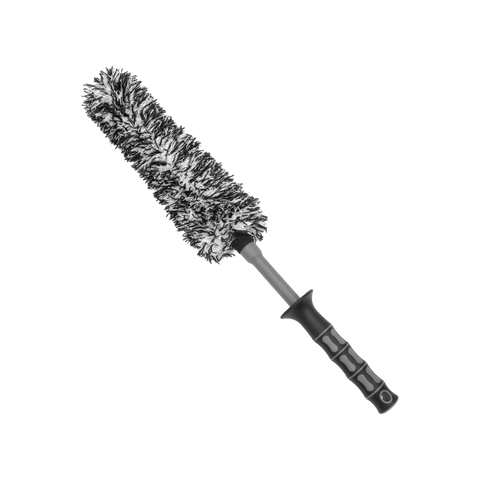
"Flex Brush" Microfibre Wheel Brush
Flexible Microfiber Wheel Brush for Safe Cleaning
Soft microfiber reaches between the spokes, the cleaner dissolves the brake dust.
TUGA Chemie
Detailing Wheel Brush for "Alu-Teufel "Spezial" (Green)"
Detailing wheel brush acid-resistant pH 0-14, metal-free

SONAX
PROFILINE Brush Set Detailing Brushes
Brush Set — 2-piece detailing brushes for tight spaces
What do you need detailing brushes for? Every spot a cloth can't get into: vent louvres, badge edges, trim strips, wheel arches and wheel spokes. At Detailing1 you'll find soft interior brushes for screens and leather, medium-stiff all-rounders, acid-resistant wheel brushes and microfibre wheel brushes for painted spokes.
Detailing brushes are slim hand tools with bundled bristles that carry cleaner exactly to where a surface stops and an edge begins. Their turf is vent louvres, seams, badge edges, wheel spokes and wheel bolts. Bristle stiffness follows the substrate, bristle material follows the chemistry. Larger brushes are the big brother for carpet, tyre sidewalls and wheel arches, where coverage and pressure matter more than finesse.
Detailing1's tip from the shop: We regularly get questions about brushes that shed bristles or bend out of shape after a few weeks. The cause is almost always drying. Stand the brush bristles-up after rinsing and the leftover water runs straight to where the glue and metal sleeve sit. The glue softens, the sleeve corrodes from the inside, and next time you use it, bristles stay behind in the vent grille. Rinse the brush clean after every use, reshape it between your fingers and lay it flat or hang it bristles-down. Wash new brushes once before first use, so they drop their loose bristles in the sink instead of on your paint.
A cloth is flat. The dirt that bugs you when you look closely almost never sits on the surface, it sits in the edge right next to it.
Vent louvres are the first example. Dust settles on narrow, moving slats, and every cloth corner you push in shoves it further back into the duct. A soft brush slips between the slats, flicks the dust forward and out, and hands it over to the vacuum or cloth.
The second classic is badge edges and trim strips. Polish, wax and spray sealant collect along lettering, door handle recesses and rubber seals and dry white there. A dry, soft brush taps the residue out without you dragging a fingernail wrapped in a cloth along the clear coat.
On the wheel it's all about geometry. Brake dust sits on the spoke flanks, in the transition to the barrel and in the wheel bolt recesses. That's exactly where neither sponge nor wash mitt can reach, and exactly where the leftover grime stays that you see as a grey haze from two metres away.
Wheel arches and the fuel filler recess are the third zone. Here it's less the detailing brush and more the scrub brush doing the work: tough bristles on textured plastic, where road film and salt cling to the grain and pressure matters more than finesse. In the arch, the surface is also curved, so a flat tool only ever touches it with one edge.
What brushes can't do is part of the picture too: they don't replace a cloth. On open panels they're slow, carry hardly any water and leave streaks. The panel stays the job of cloth, sponge and wash mitt from the accessories. The brush only takes over where the panel ends.
The rule of thumb is awkward because it goes against instinct: it's not the dirt that decides bristle stiffness, it's the surface you're working on.
Soft bristles go on anything delicate. Screens, piano-black trim, finely grained leather and chrome rings on air vents can't take pressure or a stiff bristle. The brush glides almost without force here and works through movement, not pressure. In practice: you hold it by the handle with two fingers instead of your whole fist.
Medium bristles are the all-rounder for grained plastic. Centre console, door cards, vent grilles, steering wheel rims and seat seams all fall right into this range. The bristle is stiff enough to pull dirt out of the texture and soft enough not to polish the grain shiny.
Stiff bristles are reserved for textiles and the load area. Floor mats, carpet, sill plates and boot liners need real mechanical action to get the cleaner into the fibres at all. How to prep these surfaces chemically is covered under interior cleaner.
Alongside that, bristle material decides chemical compatibility. Natural hog-hair bristles are fine, hold plenty of cleaner and swell slightly in water, which makes them pleasant inside the car. Synthetic PBT bristles keep their shape and survive acidic or strongly alkaline products like those under rim cleaner.
We see the same damage again and again: stiff bristle on gloss trim, plus a dry surface. The result is a fine haze of scratches you only spot under raking light and can only get rid of with polish. When in doubt, take the softer bristle and work longer rather than pressing too hard once.
Ferrule is the name for the short metal sleeve that holds the bristle bundle on the handle. It's the part of the brush hardly anyone thinks about, and the only part with hard edges.
Picture yourself working the brush into the gap between badge and bonnet. The bristles are short, your grip is close to the surface, and the sleeve sits almost at paint level. How you notice: a fine, straight scratch that doesn't look like a wash scratch, because it comes from metal.
The simplest fix costs nothing. Wrap two layers of cloth tape around the sleeve, tight and without creases, and the metal never touches the paint directly again. The tape lasts a few sessions, then you rewrap. If you regularly work on the exterior, tape every brush the moment you unpack it.
The second fix comes built in when you buy. Exterior detailing brushes often have rubber-coated or fully plastic-covered ferrules, and some models skip metal altogether. In practice: you save yourself the taping and lose nothing in bristle bundle stability.
On the wheel, chemistry joins in. Acidic wheel cleaners and iron removers attack an unprotected metal sleeve, and whatever corrodes there leaves orange streaks on the spoke next time round. Acid-resistant brushes aren't a marketing term, they're the difference between a clean wheel and one you have to go over again.
One last detail from what we see day-to-day: if you trim the bristles to build more pressure, you bring the ferrule closer to the surface and take away the brush's flex at the same time. Buy the shorter bristle length straight away rather than cutting a long one down.
A brush is a delivery tool for cleaner, not a scrubber. The routine has three steps: wet, loosen, pick up straight away.
Inside the car you spray the cleaner onto the brush, not onto the part. Behind vents, switches and screens there's electronics, and an over-generous spray runs right in there. The damp brush carries exactly as much product as the edge needs, and the rest of your trim stays dry.
After that, order matters. Work top to bottom through the slats and gaps first, then follow up with the microfibre cloth or vacuum while the loosened dirt is still damp. Brush now and pick up the dust ten minutes later and you've just moved it around.
On the wheel, the chemistry goes first. Apply the cleaner, let it dwell, and only then work the brush into the gaps between spokes and the wheel bolt recesses. The wheel has to be cool to the touch, or the product dries on before you've reached the second wheel.
Wheel arches, tyre sidewalls and sills are a job for the stiff brush. You can lean on it here because the surface can take it, and it works best going from the wheel outwards. What to dress sidewall and wheel with afterwards is under Tyres & Wheels.
The most important point from everyday life at Detailing1: keep your tools strictly separate. Brake dust is made of iron filings and ceramic particles that lodge between the bristles and stay there, even after rinsing. Use that same brush on gloss trim and it's no longer a brush, it's an abrasive tool.
The Detailing1 range is built around stiffness grades and chemical compatibility, not around brands.
The core for interiors is the Interior Brush line from Koch-Chemie, colour-coded by stiffness. The Koch-Chemie Interior Brush „Green" Interior Autodetailing Brush soft is our best seller in this category and the go-to for screens, trim and leather. The Koch-Chemie Interior Brush „Yellow" interior brush medium-hard takes care of grained plastic and vent grilles.
For textiles and heavily soiled sills, you step up one grade. The Koch-Chemie Interior Brush „Red" hard interior detailing brush works cleaner into carpet and floor mats, and the Meguiars Carpet & Interior Brush Cleaning Brush adds coverage when you're doing whole mats rather than single spots.
On the wheel, chemical compatibility comes first. The Koch-Chemie Wheel & Engine Brush — Acid-Resistant Detailing Brush and the TUGA Chemie Detailing Wheel Brush for „Alu-Teufel "Spezial„ (Green)" handle acidic products long-term and get between the spokes without the sleeve leaving streaks.
Where coverage counts, brushes take over. The THE COLLECTION „Flex Brush" Microfibre Wheel Brush and the GYEON Q²M WheelBrush Wheel Brush (Microfibre) wrap soft microfibre around a flexible core, so they reach right into the barrel. Then there's the Meguiars SUPREME Wheel Brush Large, whose microfibre head, with no bristles, wire or metal, reaches the barrel on a long handle. For the rough outer zone, the TUGA Chemie Wheel brush for „Alu-Teufel "Spezial„ (Green)" and the SONAX PROFILINE IntensivReinigungsBürste cleaning brush are the ones to grab.
If you want a broad start, go for sets and all-rounders. The SONAX PROFILINE Brush Set Detailing Brushes covers several sizes in one go, and the Meguiars Multi-Purpose Brush Medium Cleaning Brush is the sturdy middle step between interior brush and wheel brush.
Three questions get you to the answer: are you working inside or outside, how delicate is the surface, and is aggressive chemistry involved.
For interiors only, two stiffness grades are enough. A soft brush for screens, trim and vents, plus a medium one for console and door cards, and you've covered most of the cockpit. The stiff brush only joins in once floor mats and carpet are regularly on the list.
If wheels are your thing, spoke geometry decides. Lots of tight spokes with a deep barrel call for a slim acid-resistant brush plus a slender microfibre brush for the surface in between. Open spokes with little space between them get by with a brush alone. And if you're unsure, just count the spots on your wheel you can't reach with a flat hand: each one needs a slim tool.
If you're after one tool for lots of zones, a set is the more honest answer than one big brush. Different sizes with the same grip mean you don't improvise on a narrow edge with a wide head and end up pressing harder than you need to.
We'll also tell you what brushes can't do. A dried-in coffee stain in the upholstery needs extraction, not more brush pressure, and scratched clear coat at the badge edge won't come back with any bristle. Tools in this category reach spots, they don't replace chemistry or polish.
The bigger picture is in the parent accessories category, the matching chemistry under interior cleaner and rim cleaner. A brush is cheap compared with the rework it saves you, and it's the only tool that makes the last ten percent of a detail visible at all.
Too much choice in Brushes & detailing brushes? Get help picking:
Daniel von Detailing1 |

Jasper von Detailing1 |

Daniel von Detailing1 |

Daniel von Detailing1 |

Daniel von Detailing1 |

Jasper von Detailing1 |

Jasper von Detailing1 |

Daniel von Detailing1 |

Daniel von Detailing1 |

Daniel von Detailing1 |

Daniel von Detailing1 |

Daniel von Detailing1 |


