

Clean a Tesla screen: what the Model Y touchscreen can take
Daniel von Detailing1 |


Koch-Chemie
Teerwäsche A "Tea" Bitumen & Tar Remover
Perfect bitumen and tar removers for a flawless finish
GYEON
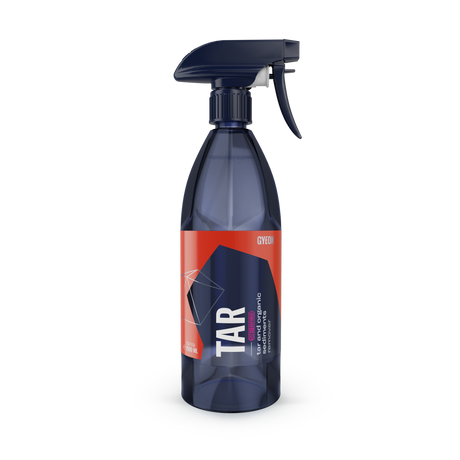
Q²M Tar (REDEFINED) Resin & Tar Remover
GYEON Q²M Tar – Tar and Glue Remover for Paint and Bodywork

GYEON Q²M Tar softens tree sap and tar, then you simply wipe them off.
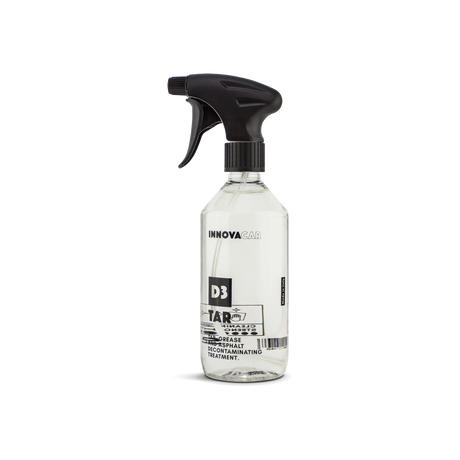

INNOVACAR
Remove tar and asphalt from your paint


CarPro
Ultimate solution for rust film and tar removal

SONAX
PROFILINE Tar Remover Tar Remover
Tar Remover — Removes bitumen, adhesive, and tree resin


CarPro
"TarX" tar & adhesive remover
Effective tar and adhesive remover for versatile applications
Tar removers help with deposits that remain after washing the vehicle. The specific surface and the chosen product's instructions are what matter. Tea, Q²M Tar REDEFINED and D3 Tar differ in material compatibility and application; there is no single dwell time for all of them.
A tar remover is a specialist cleaner for loosening adherent tar and bitumen deposits on compatible surfaces. It supplements normal washing for these contaminants and does not replace a material compatibility check. Depending on the product, certain adhesive residues or tree sap may also fall within its scope. The right choice therefore depends on the combination of residue, surface and manufacturer's instructions, rather than a mark's dark colour alone.

Practical tip: Do not transfer D3's 2 to 5 minutes to Tea. Koch-Chemie specifies brief contact for Tea without a fixed number of minutes. Prepare your cloth and the intended removal method before application, and keep the small working area in view. Waiting longer replaces neither a compatibility test nor the right product choice.
Black spots adhering to the bodywork call for targeted cleaning, but do not yet prove a particular type of contamination. First look at what actually remains after the normal wash. Loose dirt, a sticky deposit and a changed paint surface call for different decisions. Applying a stronger product does not make an unidentified mark easier to diagnose.
These splashes are often called tar spots in everyday language, although road construction uses bitumen as the binder in asphalt. Bitumen comes from petroleum, whereas tar comes from coal. What matters for your choice is whether the selected product covers both the residue and the specific surface. Black or brown colour alone cannot reliably establish that combination.
Start by identifying the surface: is it compatible vehicle paint, glass, plastic or an applied film? Is any refinishing known? Approval for paint says nothing about every neighbouring component. A painted plastic part also needs a different assessment from an unknown soft plastic surface. Include edges and adjacent materials in your check.
For tree sap or adhesive residue, look closely at the stated purpose. GYEON and D3 expressly name these tasks, while Tea is presented here primarily for tar and bitumen. If another contaminant is your main concern, tree sap removers offer a further relevant selection. This is not a suggestion to apply several cleaners in succession to an unidentified mark.
If the origin or material remains unclear, establish it before applying anything. This preparation makes more sense than trying the product across the entire surface, especially on wrapped vehicles, refinished parts or surfaces already showing changes. A concealed test is part of the particular application. It does not, however, extend an explicit manufacturer approval or override an exclusion.
The right choice depends on the surface and planned procedure because the three cleaners do not share identical approvals and application steps. Compare their limits before pack sizes and equipment. A bigger bottle does not mean a stronger product, and a longer stated dwell time is not evidence of better cleaning.
| Product | Intended focus | Application and important limit |
|---|---|---|
| Koch-Chemie Teerwäsche A "Tea" | Tar and bitumen on solvent-resistant surfaces | Apply neat to a dry surface, allow brief contact and work manually if needed; pressure-rinse or wipe with a cloth. No fixed number of minutes specified. |
| GYEON Q²M Tar REDEFINED | Tar, adhesive residue and tree sap; the manufacturer names paint, glass and painted and unpainted plastics | After the first wash, work in small areas, do not let dry and rinse off; assist with a microfibre cloth if needed. Do not mix with shampoo. |
| INNOVACAR "D3" Tar | Tar, sap and adhesive residue on compatible bodywork and glass | Use neat for 2 to 5 minutes; remove with a microfibre cloth or rinse with plenty of water. Do not use on PPF, wraps, fresh paint or vehicles with spot repairs. |
Tea requires a solvent-resistant surface: the substrate must tolerate the intended cleaner. This does not amount to approval for every surface on a car. GYEON names a wider material range and also describes its product for coated surfaces. The relevant care instructions, a suitable surface condition and preventing drying nevertheless remain decisive.
D3's exclusions deserve particular attention. PPF means paint protection film, while wrapping refers to vehicle wraps. Spot repair is a localised repair of paint damage. The fact that D3 can loosen adhesive after a film has been removed does not authorise its use on a film still in place. The manufacturer also expressly excludes vehicles with such local paint repairs.
Check the selected Tea variant as well. The 1-litre bottle and the version with an additional Canyon spray head are separate offers. Order the equipment you actually need rather than assuming every bottle includes a sprayer. GYEON offers 500 ml and 1 litre among its sizes; the specific variant determines the contents and what is supplied.

Good preparation helps you remove loosened residue in a controlled way and keep adjacent surfaces in view while using the chosen product. First wash the vehicle according to its care instructions. Targeted treatment starts with the marks remaining afterwards. For Tea, the surface must be dry during application; a still-wet area does not match this procedure.
Do not work on hot bodywork or in direct sunlight, and choose a small area whose progress you can observe. Have a suitable, clean microfibre cloth ready and plan the product's specified removal method. If water is needed, it must be available before you begin. This avoids unnecessary time pressure while the cleaner is already on the surface.
Follow the container and safety data sheet instructions for hand and eye protection and ventilation. Select chemical-resistant hand protection for the specific product. A glove is not suitable simply because of its colour or because it is described as disposable. Avoid skin and eye contact, and plan where used cloths will go so they do not unintentionally touch other surfaces.
Test the intended application on a suitable concealed spot first. Observe the surface before extending the working area. This is particularly relevant if you do not know the paint's condition or history. If you notice a change, do not simply continue with more product or a longer dwell time; establish its cause.
Use each product according to its own instructions. GYEON explicitly prohibits mixing Q²M Tar REDEFINED with shampoo; Tea and D3 are intended for neat use in the applications described. Do not invent a stronger mixture or a convenient bucket dilution. Washing the vehicle separately is different from mixing products in the same bottle or combining them in one working step.
The specific Tea procedure starts on a compatible, dry surface and finishes with complete removal as specified by the manufacturer. Apply the tar remover neat to the affected area. Keep the area manageable enough to watch during the brief contact period and work on it afterwards. No invented spray distance or fixed number of trigger pulls is specified for this.
Koch-Chemie calls for brief contact and manual work if needed. A fixed range of seconds or minutes cannot be derived from that. Assess progress on the area being treated and follow the actual product instructions. A statement of 2 to 5 minutes on another cleaner does not automatically make that time suitable for Tea.
Removal follows the brief contact period: according to the manufacturer, you can pressure-rinse or wipe with a cloth. These are two specified options, not a requirement to combine both every time. Which option suits your working area also depends on the surface, available equipment and the planned way of carrying out the job.
When wiping, the cloth should pick up the loosened residue. Switch to a clean section when the current one is visibly dirty, rather than spreading the collected deposit further. Do not expect a heavily soiled part of a cloth to give you a clean final inspection. The option of manual follow-up work is also not an instruction to rub unidentified hard spots away with pressure.
If residue remains, first check that the product, material and assumed contamination match. GYEON and D3 manufacturers describe another application if necessary. Even so, a second treatment is not an automatic solution for every surface. A visible change in the substrate or an unclear paint mark needs investigating before you add more products or mechanical treatment.

After removal, assess the cleaned spot again before applying further cleaners, polish or a new protective layer. Do not look only for the disappearance of dark spots. Also check whether collected dirt has been spread around or whether the surface looks unusual. A clean final inspection helps you base the next step on the actual result.
Brown runs can appear during treatment, as also seen in the manufacturer's Tea video. They are not a general indication that the entire area is finished. Equally, the absence of visible colour running does not prove you need to rub harder. Observing the actual residue matters more than expecting a particular visual effect.
Blanket promises about paint protection are not particularly useful. GYEON also describes Q²M Tar REDEFINED for coated surfaces, while its specific suitability and application requirements still apply. That does not mean every cleaner leaves every protective layer unchanged, or that the entire vehicle must automatically be resealed after each treatment. Follow the existing protection system's instructions and inspect the treated area.
If you intend to apply protection afterwards, the surface must meet the chosen product's requirements. Tar treatment alone is not complete preparation for every possible sealant. Nor does a clean-looking cloth or a particular beading pattern confirm every requirement of another system. Plan further cleaning and protection according to its instructions and the actual need.
If the surface stays rough or patchy, reassessing it matters more than quickly moving to the next cleaner. The paint and bodywork overview helps you distinguish further care tasks. It does not replace diagnosis of an unusual paint change. If repairs are unknown or the result is unclear, seek knowledgeable advice before continuing to work on the surface.
For films, refinished paint and unusual deposits, the choice stops where there is no appropriate approval for the specific product and surface. D3's current technical sheet prohibits use on PPF, wraps or fresh paint, and on vehicles with spot repairs. Particularly brief contact or a concealed test does not override these exclusions.
With another tar remover, too, approval for a particular plastic cannot be expanded at will. Glass, a painted bumper and an unknown transparent cover are different tasks. Establish the exact surface and its care requirements. Do not use general statements about gentle cleaning, fragrance or ingredient origin as a substitute for that decision.
For adhesive residue, the type of deposit is an additional consideration. A product that loosens tar is not automatically suitable for every adhesive or coated surface. The adhesive removers category provides a separate selection for that purpose. Compare the intended surfaces there too, and avoid applying several products to the same spot without a clear procedure.
Household remedies and detailing clay do not replace these checks either. Videos and forums show grease, paper and various cleaner combinations; this does not establish their compatibility with your vehicle. A single demonstration provides neither a general recommendation nor a reliable comparison. The appropriate manufacturer's instructions offer a firmer basis for selection, application and removal.
Once the surface is suitable, choose between Tea with its clear dry-application procedure, GYEON with the wider material range described, and D3 within its explicit limits. Then select the right size and have the necessary equipment ready. Cleaning can begin with a reasoned choice and a manageable working area, rather than a supposedly universal bottle.

Too much choice in Tar remover? Get help picking:
Add Detailing1 as a preferred source on GoogleBitumen comes from petroleum and is used, among other things, as a binder in road asphalt. Tar comes from coal. The terms are often mixed up in everyday language. Cleaning therefore depends on more than a spot's name: the chosen product must match the actual residue and the specific surface.
Choose a product suitable for the specific paint surface and check compatibility before wider application. Tea is applied neat to a dry surface, allowed brief contact and worked manually if needed. Then pressure-rinse or wipe with a cloth. Other products follow their own instructions; there is no common universal dwell time.
Koch-Chemie specifies brief contact for Tea without a fixed number of minutes. GYEON describes small working areas, preventing drying and rinsing afterwards, without a fixed dwell time. INNOVACAR expressly specifies 2 to 5 minutes for D3. This time applies only within that product's stated material limits.
GYEON names painted and unpainted plastics for Q²M Tar REDEFINED, but the specific surface and its care requirements remain decisive. This does not approve every film. D3 expressly excludes PPF, wraps, fresh paint and vehicles with spot repairs. A concealed compatibility test does not override these manufacturer exclusions.
The cause cannot be established reliably without inspecting the surface. First check whether residues were fully removed and whether the product, contamination and surface match. Use a clean cloth section for the intended removal. If paint changes look unusual or its history is unclear, seek expert assessment instead of rubbing harder or trying several more products.
This is not a general requirement after every application. The cleaner, existing protection and relevant system instructions determine the next step. GYEON also describes Q²M Tar REDEFINED for coated surfaces. Inspect the treated area and prepare any intended new protection according to its own instructions; tar treatment alone does not automatically meet every requirement.
Check whether Koch-Chemie Teerwäsche A is suitable for the specific surface. It must be solvent-resistant. For films, unclear refinishing or unusual surface changes, first obtain informed confirmation of suitability. These instructions apply only to Tea on a compatible vehicle surface.
Wash the vehicle according to its care instructions and let the affected area dry for Tea. Work on a cool surface away from direct sunlight. Prepare a cloth or the intended rinsing equipment and follow the container and safety data sheet instructions for ventilation and eye and hand protection. Test compatibility on a suitable concealed spot.
Apply Tea undiluted to the affected dry surface. Choose a small, manageable area and observe it during treatment. Do not mix the cleaner with other products according to an improvised recipe. No fixed number of sprays is specified here.
Let Tea act briefly according to its manufacturer's instructions and work manually if needed. No fixed range of seconds or minutes is specified. Do not transfer D3's 2 to 5 minutes to Tea. Do not tackle unidentified hard spots or unusual changes with more pressure.
As instructed for Tea, pressure-rinse or wipe with a suitable cloth. When wiping, switch to a clean section after picking up residue. Inspect the treated area afterwards. Establish the reason for an unclear result before using more cleaners, mechanical treatment or fresh protection.
Daniel von Detailing1 |

Daniel von Detailing1 |

Daniel von Detailing1 |

Daniel von Detailing1 |

Daniel von Detailing1 |


Daniel von Detailing1 |

Daniel von Detailing1 |

Daniel von Detailing1 |

Daniel von Detailing1 |

Daniel von Detailing1 |

Daniel von Detailing1 |