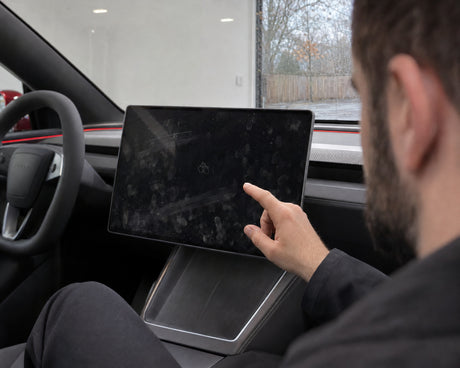
Clean a Tesla screen: what the Model Y touchscreen can take
Daniel von Detailing1 |


Koch-Chemie × COLOURLOCK
COLOURLOCK "Fresh Up" Odour Neutraliser with Fresh Scent
Fresh and effective odor neutralizer for interiors and leather

INNOVACAR
"ESSENTIALS KIT" Trial Pack 4x50ml ("X2"+"W1"+"0"+"N0")
Trial kit with four Innovacar basics in 50 ml size

GYEON
Q²M OdorRemover "Purify Line" Odour Remover
Odor Remover Purify Line – neutralizes instead of masking


CarPro
"So2Pure" 2.0 Air-Purifying-Coating Odour Eliminator
Innovative photocatalytic indoor coating for clean air


Meguiars
Carpet & Cloth "Re-Fresher" Odour Remover
Odor eliminator spray for upholstery, carpets, and textiles
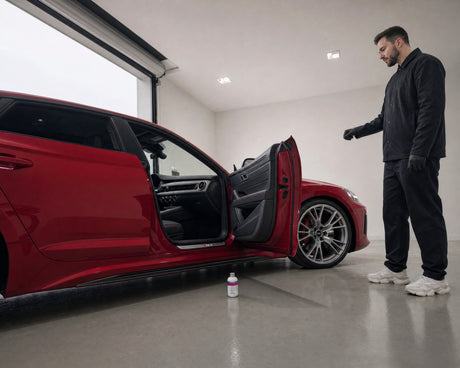
COLOURLOCK "Fresh Up" neutralises odours in the cabin and leaves a fresh scent.


INNOVACAR
Fresh interiors thanks to innovative odor remover
Car odour removers help you target unwanted cabin smells. The odour source, affected material and appropriate procedure determine the choice. Compare textile sprays with total-release cabin aerosols and find out why preliminary cleaning, material checks and subsequent ventilation belong in your decision.
Car odour removers treat substances that cause smells inside a vehicle. Depending on the product, they may bind these substances, for example. Apply the product to selected surfaces or distribute it as a fine mist through the cabin. An odour neutraliser can still leave a fragrance of its own. The term therefore means neither fragrance-free nor disinfecting. Choose by approved material and application: a textile product is used differently from a total-release aerosol.

Smoke in a used car, a leaking shopping bag and the smell of a damp floor mat present different tasks. Before choosing a product, look under the seats, in the boot and at the affected coverings. Remove accessible residue and establish whether any surface is still wet. Find suitable interior cleaners for the preliminary clean; choose the subsequent odour treatment afterwards.
Detailing1 practical tip: Read the complete label on a Meguiar's Air Re-Fresher can before activating it. Schedule the 15-minute treatment stated in the German instructions after preliminary cleaning. Leave the vehicle during use and ventilate thoroughly afterwards. Reassess the original smell later rather than immediately treating the fresh fragrance as proof that its cause has been fully resolved.
Choosing a suitable odour remover starts with finding the cause, because adding fragrance does not remove remaining residue or damp materials.
With a spilled drink, the affected spot matters first. Smoke odour, by contrast, can involve several cabin areas. Distributing a product indiscriminately throughout the car does not address those differences. Look for accessible residue and check which surfaces you can clean according to the vehicle instructions. The type of dirt and material compatibility guide the next step.
Include loose items such as wet sportswear, pet blankets or forgotten food in this inspection. If you can take them out, treat the vehicle and item separately. Follow the care instructions for mats, covers and blankets. What is allowed for a removable textile mat does not automatically apply to a bonded headlining or an installed seat.
Dirty seat fabrics and carpets first need a suitable upholstery cleaner. It should loosen the relevant residue and allow you to remove it. A subsequent odour neutraliser does not replace this cleaning step. Equally, not every cleaned surface needs added fragrance: after complete drying, check whether an unwanted smell remains at all.
If the cabin repeatedly becomes damp, spraying again is not an adequate solution. Check visibly affected areas and have the cause assessed professionally if needed. The same applies to a smell that appears mainly when the ventilation starts. You can choose suitable care only once it is clearer whether the task concerns a covering or the vehicle’s equipment.
This order also helps when buying. Targeted spray application on a small, suitable textile area is a different choice from treating an empty cabin with a can. Choosing the strongest fragrance first may temporarily make the original smell harder to assess without having removed its source.
A textile spray treats suitable surfaces directly, whereas a total-release cabin aerosol distributes its fine mist through the ventilation circulation as instructed.
For the first approach, consider the odour neutraliser COLOURLOCK "Fresh Up" 1000 ml / 1 Liter. Koch-Chemie lists textiles, upholstery, vehicle headlinings and room air among its uses. Thorough preliminary cleaning and a test on the actual material are prerequisites. Spray sparingly afterwards; this does not establish a fixed quantity per car seat.
With a total-release can, distribution forms part of a prescribed sequence. Here, an aerosol is a fine mist in the air. The specified ventilation setting carries it through the cabin. You therefore do not hold the product and spray a single dirty spot as you would a stain treatment. The packaging format is an important clue to preparation.
The odour-removing aerosols selection defines this format. Plan one can as a single treatment. The 59 ml in the two featured variants is not a working solution to mix with water. Comparing by millilitres alone is unhelpful because application and treatment are organised differently.
Odour neutralisation and fragrance are not mutually exclusive. Fresh Up leaves a fresh scent according to its manufacturer, and the selected Meguiar's cans also have expressly described fragrance notes. If strong fragrance bothers you or you want as neutral a smell as possible, check this characteristic before buying. “Odour remover” does not mean fragrance-free.
If your already-clean cabin mainly needs a fragrance you enjoy, browse car fragrances. If a particular unwanted smell remains, focus instead on the source and suitable treatment. A pleasant note is a product characteristic, not proof that damp upholstery or deposits have disappeared.

For textiles, specific material compatibility together with a hidden test determines whether an odour neutraliser can be used appropriately after cleaning.
Check the covering’s care guidance and the product instructions first. For Fresh Up, Koch-Chemie expressly asks you to check visual and tactile changes: the test area should not only look unchanged but feel the same too. A broad statement such as “for interiors” does not replace that comparison on the actual material.
Remove the accessible odour source before application. Liquid residue in upholstery requires suitable cleaning followed by removal of the loosened material. Only then comes odour treatment. During preparation, avoid transferring extra residue from a dirty cloth or tool and unnecessarily soaking the cleaned area again.
Shake Fresh Up before use, then spray sparingly on the approved area. More liquid does not automatically mean better treatment. The instructions specify neither a general number of sprays per seat nor a dilution ratio for this use. Do not borrow a mixture from a similarly named cleaner or another odour remover.
Vehicle guidance is especially useful for delicate, bonded or layered surfaces. Listing headlinings as an application does not mean you should soak or vigorously work them. Leather, imitation leather and microfibre materials also need explicit compatibility. The same smell does not mean all affected surfaces may receive the same treatment.
Allow the treated surface to dry fully and assess the result afterwards. A fixed number of hours would be unreliable without knowing the covering, moisture and local conditions. If the smell remains, first review its source and the cleaning already carried out. A blanket plan for two or three repeat treatments does not replace that check.
A total-release odour-removing can needs a prepared, empty cabin and thorough ventilation afterwards, so do not schedule treatment immediately before a necessary journey.
For Meguiar's Air Re-Fresher, the German instructions describe treatment after cleaning with the ventilation running on recirculation. This circulates the existing cabin air. Position the can securely according to its label and activate it before leaving the vehicle. People and animals stay outside the cabin throughout treatment.
The specified 15 minutes refer to the closed treatment phase. A can may stop emitting visible mist earlier; spray duration and the prescribed circulation time are different things. Follow the instructions on your particular can. Do not shorten the procedure simply because you can no longer see a spray through the window.
Also observe warnings about heat, ignition sources and spray mist. If the prescribed procedure requires a combustion engine to run, do not carry it out in an enclosed space. Odour treatment must not create an exhaust-fume hazard. Read the instructions before activation so the can position, settings and exit from the vehicle are prepared.
Ventilate thoroughly after treatment. The German manufacturer instructions do not provide a universally applicable waiting time in minutes that applies to every cabin. Allow enough time and follow the packaging guidance. A cabin that still smells strongly of fragrance is no reason to activate a second can straight afterwards.
The process distributes the product but does not replace physical removal of deposits in the air-conditioning system. ADAC distinguishes these click-activated cans from proper system cleaning. If smells repeatedly emerge from the vents, have the system checked. Calling a can a general disinfectant or an air-conditioning service would overstate its purpose.

The appropriate choice depends on your preferred application and the product’s scent. Product names alone do not prove stronger performance or identical formulas.
Fresh Up suits targeted follow-up treatment of compatible textile areas. You can restrict application to the approved surface without activating a total-release can. That changes the routine but does not guarantee that every deep-seated smell disappears in one pass. Preliminary cleaning remains the common foundation.
For the can format, one option is the cabin odour remover Meguiar's "ULTIMATE Whole Car Air Re-Fresher" 59 ml. The current German product description lists pineapple, cherry and pomegranate fragrance notes. Choose it consciously for that scent profile too. ULTIMATE does not mean an independent comparison has proved stronger odour removal than every other variant.
The odour remover Meguiar's "Tropical Rainforest Air Re-Fresher" 59 ml uses mango, lotus blossom and tonka bean notes according to the German manufacturer description. The can procedure is part of this decision too. A different fragrance does not allow arbitrary changes to application quantities or repeat intervals. Check your chosen variant’s instructions.
Two practical questions help the comparison: do you want to treat one suitable surface or schedule a separate whole-cabin cycle? And do you want the described fragrance in the car afterwards? Those answers are more useful than a general ranking. They consider your routine and avoid expecting the biggest name on the label to solve every cause.
Fixed promises about duration are not especially helpful. In an actual Fresh Up customer review, the buyer rates the product positively while wishing it lasted longer. That is one experience, not a general measurement. It nevertheless illustrates why you should choose an odour remover for the appropriate task rather than assume a set number of odour-free weeks.
If an unwanted smell returns after treatment, review its source instead of automatically applying more product or extra fragrance cans.
First compare where and when you notice it. Is it a particular mat, a seat after drying or the air only after starting the ventilation? This observation helps narrow down the next step. It is not yet a technical diagnosis, but it prevents treating every problem with the same spray routine.
For textiles that remain dirty, material-appropriate cleaning is still decisive. Recurring dampness requires its cause to be resolved. If residue has penetrated deeply or care instructions are unclear, professional support is more useful than increasingly strong home experiments. This does not establish a general recommendation for ozone, aggressive household remedies or combining several odour removers.
Smoke odour calls for a thorough look at the affected cabin areas. Spraying only the middle of a seat is not an inspection of the whole vehicle. Treat accessible surfaces according to their own requirements and have technical areas assessed if needed. Promising complete removal of every case of long-standing smoke contamination would be unreliable without examining the actual car.
Vomit or spilled food also requires residue removal first. A spray mist cannot do that work. Get help if you cannot reach the affected area adequately or the covering remains unusual after suitable cleaning. Do not use a product’s fresh fragrance as proof that invisible residue has also been fully removed.
The selection criteria therefore remain clear: a suitable accessible surface, verified material compatibility and the prescribed procedure. Fresh Up complements targeted treatment; the featured Meguiar's cans provide a separate cabin cycle with their own scent. Start with the cause, prepare the application fully and reassess the result after drying or thorough ventilation.

Too much choice in Odour remover? Get help picking:
Add Detailing1 as a preferred source on GoogleAn odour neutraliser treats odour-causing substances, for example by binding them. The exact method depends on the product. These treatments may still leave their own fragrance. They do not automatically remove dirt or moisture or act as general disinfectants. First remove the cause, clean suitable surfaces, then follow material compatibility and product instructions.
Identify the affected cabin areas and clean accessible surfaces with products suited to each material. Adding fragrance alone does not replace this preparation. A suitable odour remover can then supplement cleaning according to its instructions. Deep-seated or returning smoke smells warrant professional assessment; one treatment cannot guarantee complete removal of every old contamination.
A textile spray such as COLOURLOCK "Fresh Up" treats suitable prepared surfaces directly. A total-release Meguiar's Air Re-Fresher can distributes mist through the ventilation circulation during its prescribed cycle. People and animals must leave the vehicle; ventilate thoroughly afterwards. Choose by task and material compatibility. Both featured types have their own scent.
That depends on the specific product’s suitability and the material care instructions. A general interior recommendation is not enough for every leather or microfibre covering. Confirm compatibility explicitly and test a hidden area for changes in appearance and feel. Do not transfer another product’s approval to the one you are using.
First remove accessible residue and clean the affected surfaces with a method suited to the material. An odour remover does not replace this work. Let cleaned textiles dry fully and check for remaining smells. Get professional help for deeply absorbed or inaccessible residue. An extra fragrance can does not prove the source is gone.
The 15 minutes in the German manufacturer instructions describe the closed treatment phase, not guaranteed visible spray time. Follow your particular can’s procedure, leave the vehicle during use and ventilate thoroughly afterwards. Preliminary cleaning and subsequent ventilation add time. If a combustion engine runs for this process, never perform it in an enclosed space.
Establish whether the affected textile may be treated with Fresh Up under the material and vehicle guidance. Look for accessible residue or moisture. Seek professional advice first for persistent dampness, unclear care requirements or inaccessible odour sources.
Remove the odour source and clean the suitable textile with an appropriate product according to its instructions. Remove loosened residue and let the surface dry. Odour treatment does not replace this preliminary cleaning.
Shake Fresh Up before use and test it in an inconspicuous place. Compare the material’s appearance and feel. Use it on the intended surface only once suitability is established and the test shows no unwanted changes.
Spray the prepared area sparingly as instructed. Avoid unnecessary soaking. Do not invent a dilution or transfer quantities and timings from other odour removers to Fresh Up. Follow the guidance on the container.
Let the treated textile dry fully and check the original smell again. Do not plan a fixed number of repeat treatments. If the smell remains or dampness returns, check the cause and get professional support if needed.
Daniel von Detailing1 |

Daniel von Detailing1 |

Daniel von Detailing1 |

Daniel von Detailing1 |

Daniel von Detailing1 |


Daniel von Detailing1 |

Daniel von Detailing1 |

Daniel von Detailing1 |

Daniel von Detailing1 |

Daniel von Detailing1 |

Daniel von Detailing1 |