


5 leather brush mistakes that roughen car leather
Daniel von Detailing1 |


YETI
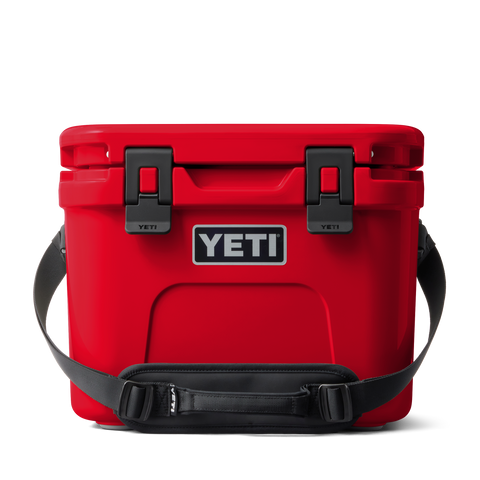
Roadie® 15 Hard Cooler cool box with shoulder strap (small)
Compact and robust cool box with excellent insulation


YETI
Roadie® 24 2.0 Hard Cooler with carry strap (small)
Compact, Powerful Cooler for Car Enthusiasts


YETI
Roadie® 32 Wheeled Cooler Cool Box with Wheels
Robust cooler with wheels, ideal for car enthusiasts


YETI
Roadie® 48 Wheeled Cooler cool box with wheels (large)
Rolling Cooler for Car Meets, Long Drives, and Detailing Sessions


YETI
Roadie® 60 Wheeled Cooler Cool Box with Wheels (large)
Robust and portable cooler with wheels for every adventure


YETI
Divider for the "Roadie® Cool Box"
Organize your Roadie® cooler with the versatile divider


YETI
Cup holder for the "Roadie® Cooler"
Robust Cup & Can Holder for YETI Roadie® Coolers


YETI
Cool box basket for the "Roadie® Cool Box"
Essential accessories for YETI Roadie® Coolers
YETI
Roadie® 8 "Hard Cooler" Cool Box with Shoulder Strap (Mini)
Hard-shell cool box, 7.6 l, for twelve cans and a day at the meet
What is the YETI Roadie range? Compact hard coolers moulded from a single piece of plastic, built for carrying in the car. The tall, narrow shape fits the footwell behind the driver's seat, and bottles stand upright inside. They come with a carry strap or on wheels, plus matching accessories.
Roadie® by YETI® is YETI's compact line of hard coolers, designed for the trip between car and destination. The body is rotomoulded — cast in one piece — and the walls are filled with polyurethane foam. The format is what sets it apart: taller and narrower than a classic cooler, so it stands in the footwell and bottles don't have to lie down.
Detailing1's tip from the shop: We often get asked why the ice is already gone by the first evening. The cause almost always comes before you set off. A box that's been sitting in the car at thirty degrees burns through its first load of ice just cooling down its own walls. Put it in the shade the night before and sacrifice a cheap bag of ice to pre-chill it, then tip it out before you pack. After that, the rough rule is two parts ice to one part contents, and the rest is lid discipline. Every time you open it costs more cold than an hour's drive in the sun.
The Roadie isn't a shrunken cooler, it's a rotated one. It gains height where classic boxes need width — and that's exactly what earns it a spot in the car.
The footwell behind the driver's seat is the most underused storage space in almost every car. It's deep, it's narrow, and it's boxed in on two sides. A wide cooler never fits there, so it ends up in the boot, blocking the space your luggage actually needs.
The upright shape also solves a problem anyone who's ever fished a bottle out of a cooler knows well. If the bottle stands, the cap stays above the waterline. The label doesn't go soggy, nothing leaks, and you grab exactly the bottle you want instead of rummaging through meltwater.
In the boot, the same geometry pays off differently. A tall, narrow box stands steady against the side wall and doesn't tip over in corners, because its whole base sits flat on the load floor. The Roadie's non-slip feet keep it where you put it, instead of letting it creep towards the boot sill every time you brake.
What we see again and again at Detailing1: when you're using it with the car, the handle matters more than the volume. A box you can lift out of the footwell with one hand while the other holds the door gets used. One that needs two hands and a healthy back stays at home.
The limit of this shape is flat stuff. Big platters, wide dishes and bulky packaging don't fit well in a tall, narrow box. If you mainly want a cooler as a carrier for prepared food, you're honestly better off with a wide format.
The Roadie splits into two groups that differ in how you move them, plus a range of accessories that keeps the inside organised.
The carry models are the YETI Roadie® 15 Hard Cooler and the YETI Roadie® 24 2.0 Hard Cooler. Both are among the models that still hang comfortably from one hand when loaded. The smaller one is the box for a day out for two, the bigger one for a weekend or a family on a long day outdoors.
The wheeled models start with the YETI Roadie® 32 Wheeled Cooler and run through the YETI Roadie® 48 Wheeled Cooler to the YETI Roadie® 60 Wheeled Cooler. You don't lift these any more, you tow them. Their wheels are solid, with no inner tube that could go flat on a gravel path or a kerb.
Between the Roadie® 32 and Roadie® 48 is the real jump in this range. The smaller wheeled box has deliberately stayed slim and still fits through tight gaps, while the two bigger ones come into their own on open ground when it's a long haul from the car park to where you're going.
Then there are the accessories, which make or break things inside. The cooler basket keeps everything dry that doesn't belong in meltwater, the divider separates drinks from food, and the cup holder turns the lid into a shelf instead of a slide.
A heads-up we'd rather give now than later: we stock this range in small quantities, and availability of individual models changes far more often than in our chemicals range. The stock you see on this page is the reliable status. For anything not currently shown, it's worth a quick message before you plan around a specific model.
The first question isn't how much fits in, but how the box gets from the car to where you're going. The size then pretty much sorts itself out.
A loaded cooler easily weighs twice its empty weight. Ice is heavy, and so is water. If you think about the trip from boot to destination in metres, any model will do for twenty metres, and for two hundred metres over gravel only wheels will.
What we see day-to-day: the most common wrong buy is a carry model that's too big. A box with plenty of volume looks sensible on the shelf and then turns into a pain by the water, because fully loaded it takes two people to move it. The handle sits well on every model in this range, but weight is still physics.
The wheeled design has its own limit, too, and it hits exactly our customers. Wheels need height, height costs space in the footwell, so a wheeled cooler practically always ends up in the boot. If you want to keep the cooler in the cabin, you'll need a carry model.
The lids differ as well. You open the smaller models in one move via a single rubber latch, which helps when your hands are full. On the wheeled models the lid is bigger and heavier, but it also holds more when you use it as a shelf.
For cooling performance there's an inconvenient rule: with the same load, the bigger model lasts longer. Not because the insulation is better, but because more ice fits in, and the ice mass itself is what stores the cold. A half-empty big box is therefore worse than a small one packed to the brim.
With these boxes, insulation isn't the limiting factor. What you put in and how often you open the lid decide how long it lasts.
Pre-chilling is the step almost everyone skips. The plastic in the walls stores heat, and that heat has to go somewhere before the box even starts cooling. A Roadie pre-chilled overnight starts the day with its full load of ice; a warm one burns through a good chunk of it in the first hour.
When it comes to ice, mass beats shape every time. Block ice and big bags melt much more slowly than cubes, because relative to their volume they have less surface for heat to attack. In plain terms: cubes for a quick chill in the evening, blocks to go the distance over a weekend.
The meltwater stays in the box. It's ice cold and keeps the temperature down, whereas an empty air gap does exactly the opposite. Only drain it once packaging starts going soggy, and even then you're better off topping up with ice than driving on with a half-empty box.
Where it sits in the car is the underrated lever. Direct sun through the rear window heats a dark box in the boot more than any outside temperature. In the footwell behind the driver's seat it's in the shade, within reach and out of the sun, which saves a noticeable amount of ice every day.
And the care afterwards decides whether you'll be happy to open the box next time. Rinse it out, wipe it with a mild cleaner, dry the seal and leave the lid open a crack somewhere dry. A box left closed and damp in a corner smells so bad after two weeks that no food will ever willingly go in again.
YETI builds three hard-box families with clearly split jobs. The Roadie is the mobile one — not the biggest and not the toughest.
The Tundra® by YETI® range is the classic block cooler with two side handles. It's wider, holds more and is built to keep cold for a long time in one place. If you want a box that sits at camp or on the boat for three days and rarely gets moved, that's where to look.
The YETI® LoadOut® range solves a completely different job. It's about transport and organisation, not keeping things cold. The stackable boxes in this family take gear, tools and wet stuff and can take a beating on the load floor, which makes them more interesting for kitting out the car than for carrying provisions.
The Roadie sits in between and handles the journey. It's the family that comes along in the car, fits in the footwell and is still a proper hard cooler with foam-filled walls. The full overview of all three families is under YETI®.
Put honestly, that also means: if the box only ever sits in the boot and gets driven to the same spot twice a year, the Roadie isn't the best fit. Its strength is the on-the-go shape, and if you don't need that, you pay for it in volume that a wider box offers for less.
Compared with basic foam coolers, on the other hand, the difference is clear. Thin-walled boxes last a few hours; with proper prep, the Roadie lasts days. That's not a marketing promise but a question of wall thickness and foam-filled insulation, which you notice straight away in the empty weight when you lift it.
The decision comes down to three questions: where does the box sit while you drive, how far do you carry it afterwards, and how many people are you packing for?
For the footwell behind the driver's seat, only a carry model will do. Measure the height between the seat rail and the front seatback and the width between the centre tunnel and the door sill beforehand. Two numbers, two minutes' work, and you'll know for sure which model fits instead of finding out when you unpack it.
If you mostly travel alone or as a pair and want to move the box one-handed, the smaller carry model is the sensible choice. It holds drinks for a day, stands securely in the footwell and goes straight from the car to where you're headed.
As soon as more people come along or there's an overnight stay, the maths tips towards the bigger carry model. The jump in volume is bigger than the jump in handling, and packed to the brim it makes it through the second night, where the smaller one already needs topping up with ice by morning.
The wheeled models pay off as soon as there's a real distance between car park and destination. Beach, campsite, festival grounds, sports field. There, the question is no longer how much you can carry but how many trips you want to make — and a wheeled cooler reliably saves you one.
If you're not sure which model suits your car and how you'll use it, ask us first. We'll also tell you if the smaller box is enough or if another family is a better fit. The full overview is under YETI®, and the alternatives with a different focus are under Tundra® by YETI® and YETI® LoadOut®.
Too much choice in Roadie® by YETI®? Get help picking:
Daniel von Detailing1 |

Jasper von Detailing1 |

Daniel von Detailing1 |

Daniel von Detailing1 |

Daniel von Detailing1 |

Jasper von Detailing1 |

Jasper von Detailing1 |

Daniel von Detailing1 |

Daniel von Detailing1 |

Daniel von Detailing1 |

Daniel von Detailing1 |

Daniel von Detailing1 |


