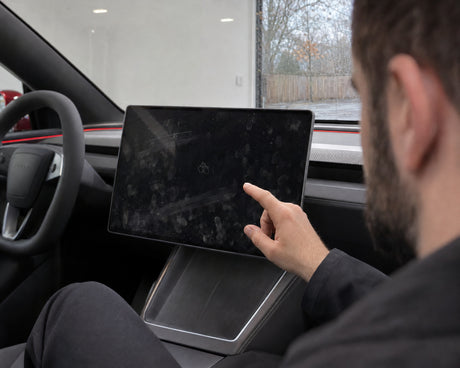
Clean a Tesla screen: what the Model Y touchscreen can take
Daniel von Detailing1 |


Koch-Chemie
Magic Wheel Cleaner "Mwc" Wheel Cleaner
Acid-free wheel cleaner with color change for daily workshop use


Koch-Chemie
Gentle Snow Foam "Gsf" Cleaning Foam
pH-neutral pre-wash foam for weekly paint care


Dr. Wack "S100"
"S100" Motorcycle Wheel Cleaner for Motorbikes
Effective wheel cleaner for sparkling clean motorcycle wheels


Dr. Wack "S100"
"S100" Total Reiniger Plus Cleaner for Motorcycles
Self-drying motorcycle cleaner for gentle care
TUGA Chemie
Biker's Super-Teufel® Motorcycle Cleaner
pH-neutral motorcycle cleaner gel with iron remover for complete wash


Dr. Wack "S100"
"S100" Power Bike Shampoo for Motorcycles
Ultra gentle & powerful motorcycle wash thanks to innovative foam
TUGA Chemie
Biker's Felgen-Teufel® wheel cleaner for "motorcycles"
Acid-Free Motorcycle Wheel Cleaner with Chelating Agent Indicator
A clinging cleaning gel makes awkward motorcycle surfaces easier to treat; shampoo suits a measured hand wash. What matters is the dirt present, the approved materials and your washing equipment. Contact times and dilution ratios differ even between products from the same brand.
Motorcycle cleaners loosen typical dirt such as road film, insect remains and flung-off chain grease on motorcycle surfaces approved for the product. The category covers different formulations and applications: ready-to-use spray cleaners, bucket-wash shampoo and specialist wheel products. A cleaner for fairings is therefore not automatically suitable for the drive chain. For the protection and care steps that follow, find suitable options in motorcycle care.

Detailing1's tip from the shop: With Power Bike Shampoo, identify your washing equipment first, then measure out the right amount. One cap holds 30 ml. Two caps go into 1 litre of water for a foam sprayer; for hand washing, two to three caps per 5 litres of water fall within the specified range. The number of caps alone does not tell you whether the mixture is right.
Choose motorcycle cleaners to suit the dirt and your method: a ready-to-use gel treats dirty surfaces directly, while shampoo supports hand washing as a measured wash solution.
After a ride, residues are rarely spread evenly over the bike. Insect remains stand out at the front, road film clings to lower fairings, and flung-off lubricant may collect on the rear wheel. Start by identifying these areas. This helps you decide whether one general clean is enough or a particular area needs separate treatment.
A gel-type all-over cleaner stays on the surface after spraying for its specified contact time. Water then removes the product and loosened dirt. The clinging consistency is especially useful on vertical parts. It does not make extra waiting time or vigorous scrubbing a necessary part of every wash.
Motorcycle shampoo is mixed with water for hand washing. Move the wash solution over the surface with a suitable, clean wash mitt or sponge. If you regularly wash this way, the bucket dosage is an important selection point. A good spray function offers no extra benefit for this stage.
For heavily soiled wheels, there are motorcycle wheel cleaners. Their job is tailored to wheels and the dirt described for those products. A similar name or the same brand does not turn a wheel specialist into an all-over cleaner. Equally, successfully cleaning a fairing does not prove that the same process will remove stubborn brake dust.
The chain remains a separate job too. Flung-off chain grease on an approved surface can be treated with a cleaner described for that purpose. Clean and lubricate the drive chain itself according to its own instructions. This is particularly useful when putting together your kit: surface cleaner and chain care are not interchangeable purchases.
A motorcycle cleaner must suit the surfaces you actually treat; paint, wraps, bare metal and special coatings require a close look at the manufacturer's instructions.
Before washing, look at which material you will reach. A painted metal part is cleaned at its painted surface; a bare area beside it may have different requirements. This also applies to aftermarket parts and graphics. Your motorcycle's general model description says little about all the surfaces now fitted to it.
For S100 Total Reiniger Plus, Dr. Wack explicitly lists matt paint and glossy and matt wraps. Bare, uncoated aluminium requires a test in an inconspicuous area first. Black-chromated parts are excluded. That exclusion does not disappear because the rest of the tank or fairing is suitable for the cleaner.
Power Bike Shampoo excludes chromated materials. Do not simply replace this term with “chrome-plated”. If you do not know how a part's surface has been treated, check the vehicle or component documentation. An assumed similarity between the words is not a sound basis for choosing a product.
For Super-Teufel, TUGA requires a prior compatibility test on, among other things, sensitive paint finishes, aluminium, polished or uncoated surfaces and graphics. Leather is outside its intended uses. A leather bag on the motorcycle should therefore not be treated in passing. Take these accessories as seriously in your planning as the permanently fitted fairing.
A single label term such as acid-free does not answer these questions. The pH value, which classifies a liquid as acidic, neutral or alkaline, does not replace material approval either. Compare the specifically listed surfaces and limits. If your bike has a protective coating, its care instructions also apply.

With motorcycle shampoo, the washing equipment determines the mix: a foam sprayer, foam lance and wash bucket are separate applications, even if you use the same bottle of shampoo.
Power Bike Shampoo can serve as a pre-cleaner and for hand washing. Decide which step comes next before mixing it. Putting the same quantity into an arbitrary container changes the dilution. Measure the water too, rather than simply using a familiar number of caps.
| Power Bike Shampoo application | Manufacturer's specification | Next steps |
|---|---|---|
| Foam sprayer | 45–60 ml per 1 litre of water | Leave for 2–3 minutes, then rinse |
| Hand washing with a bucket | 60–90 ml per 5 litres of water | Wash from top to bottom, rinse with clean water and dry |
| Foam lance | Undiluted product in the reservoir, as specified in the product sheet | Follow the equipment instructions and rinse afterwards |
The reservoir instruction for the foam lance does not mean you should apply undiluted shampoo to paint by hand. It refers to that particular equipment setup. Check whether your accessory is actually a foam lance or a foam sprayer. A similar-looking container is not enough reason to adopt another device's mixing instructions.
For hand washing, clean equipment and the right sequence go together. Rinse off loose, heavy dirt first and start washing the upper areas. Check the mitt for collected dirt as you go. Its job is to carry the solution; visible particles should not be carried from one surface to the next.
Only mix what you need for the job: Dr. Wack does not provide for storing diluted shampoo. Keep the bottle protected from frost. If regular bucket washing is your main plan, find more suitably categorised products under motorcycle shampoo; the dosage remains product-specific there too.
Before washing, the motorcycle and its surfaces must have cooled down; a shaded work area and ready access to rinsing help you follow the intended application.
Riding to the wash bay does not mean the bike is ready to spray straight away. The engine, exhaust and other parts may still be warm even when the fairing feels cool. Allow for cooling down. No fixed number of minutes can reliably cover every motorcycle, ride and outside temperature.
Choose a suitable place intended for vehicle washing where you may use the equipment needed. Have cleaner, clean washing tools and drying towels ready. Arrange the work so you are not looking for a water connection during a limited contact time. Spray and gel cleaners must not dry on the surface either; rinse them off thoroughly in good time.
Then read the preparation instructions for your product. For Total Reiniger Plus, Dr. Wack describes a dry, cooled motorcycle as a favourable starting point. With shampoo, rinsing away heavy dirt comes before washing. These differing instructions do not create a general rule to spray every cleaner onto either a wet or a dry surface.
The vehicle manual also matters when using water. Honda warns of possible damage to electronics, seals and bearings from careless pressure washing; ADAC names further sensitive areas. Do not direct a powerful jet indiscriminately into every opening. The rinsing action needed must respect the motorcycle's limits.
If dirt needs gentle agitation, use a clean tool suited to the surface. More pressure is no substitute for a suitable cleaner. Also follow the protective measures on the actual product label when handling it.

When buying motorcycle cleaners, compare the method and material limits first; pack size, spray head and refill needs are the next useful points to consider.
Biker's Super-Teufel suits direct surface treatment with a clinging gel. Its short maximum contact time means you must be able to rinse promptly. The spray bottle is practical for this process; if you regularly need larger quantities, you can then compare suitable motorcycle cleaners in refill containers. More product does not widen the range of approved materials.
With Total Reiniger Plus, the upside-down spray head may be the deciding factor if you often treat lower or awkwardly positioned areas. Allow the specified 10–20 minutes. At temperatures below 15 °C, Dr. Wack states up to 30 minutes. This particular time window belongs to this product and does not replace watching the treated surface.
Power Bike Shampoo is the option to compare if you deliberately want to work with wash solution and a mitt. The manufacturer describes it as gentle on waxes and sealants. You need to organise the equipment, mixture and hand wash yourself. If you only want a ready-to-spray all-over cleaner, this purchase gives you a different process.
Two individual customer comments add context: a review of the Super-Teufel refill container dated 25.06.2026 reports good dirt and insect removal. On 24.08.2026, a buyer of the anniversary version of Total Reiniger Plus describes it as easy to use. Both comments come from approved product reviews on Trusted Shops. They do not replace checking compatibility with your materials.
Test verdicts need context too. In 2021, KÜS assessed cleaning performance, handling and material compatibility separately. That distinction helps your comparison: good dirt removal alone does not answer every question. With test recommendations, look at the year, the product version tested and the part of the assessment that matters for your motorcycle.
Cleaning is only finished once all products have been removed and the bike is dry; afterwards, check awkward areas and the follow-up care specified by the vehicle manufacturer.
After the contact time or hand wash, rinse thoroughly with clean water. Include accessible edges and recesses as well as the clearly visible surfaces. For partial cleaning, ADAC recommends including neighbouring areas. This ensures the finishing rinse is not limited to the exact spot where you originally applied the cleaner.
With shampoo, simply wiping dry does not follow the hand wash. First remove the detergent residues with water. Then take up the remaining water with clean, suitable drying towels. A dirty wash mitt is not a drying towel. Even during finishing, keep tools used on heavily soiled areas separate from sensitive visible surfaces.
Check the result when dry. A remaining residue may call for a different cleaning task; washing again will not repair a damaged coating. Only after checking should you decide whether another step is needed at all. Repeated spraying without identifying the residue is not a reliable way to reduce maintenance work.
Preparing the bike for riding includes follow-up care according to its manual. Honda mentions, for example, checking brake operation and lubricating the drive chain after washing and drying it. Follow your motorcycle's instructions and those of the care product. Protective sprays, waxes and oils must not stray onto tyres or braking surfaces.
A final check is especially worthwhile with Total Reiniger Plus's self-drying effect: Dr. Wack still requires you to remove water left on horizontal surfaces. Before putting the bike away, look specifically for droplets and small pools. The useful outcome is a motorcycle you have checked is dry, not simply a shiny surface after rinsing.

Too much choice in Motorcycle cleaner? Get help picking:
Add Detailing1 as a preferred source on GoogleA motorcycle cleaner tackles typical dirt on approved motorcycle surfaces, such as road film, insect remains and flung-off chain grease. The term covers different applications: directly applied cleaning gel, measured shampoo and wheel specialists. A fairing cleaner is not automatically suitable for the drive chain or for cleaning without a subsequent water rinse.
Let the motorcycle cool down and rinse off heavy dirt. For hand washing with Dr. Wack "S100" Power Bike Shampoo 1000 ml / 1 litre, mix 60–90 ml per 5 litres of water. Wash from top to bottom, rinse thoroughly with clean water and dry. The foam-sprayer dose applies to a different equipment setup.
Ready-to-use cleaning gel is sprayed directly onto suitable dirty surfaces, left for the specified contact time and rinsed off. For hand washing, mix motorcycle shampoo into a wash solution and spread it with suitable tools. Gel consistency describes cling, not universally greater cleaning power. The task and material approvals are what matter.
That depends on the product. For "S100" Total Reiniger Plus 750 ml, Dr. Wack explicitly lists matt paint and glossy and matt wraps. Black-chromated parts are excluded; bare, uncoated aluminium needs a prior test. A general term such as acid-free does not replace this material check.
There is no fixed number of minutes for every motorcycle and ride. Only clean cooled surfaces out of direct sunlight, and follow the vehicle manual too. The engine and exhaust may still be warm on arrival even though the fairing feels cool. A longer contact time does not make up for unsuitable temperatures.
Base it on use and dirt rather than a fixed weekly interval. Honda recommends regular cleaning and, if necessary, washing sooner after rain, mud or dust. Check the different areas: insects at the front, road film on fairings and residue at the rear wheel. Chain care also follows your motorcycle's instructions.
This process covers bucket hand washing with Dr. Wack "S100" Power Bike Shampoo 1000 ml / 1 litre. Instructions for cleaning gels and foam equipment differ.
Work with a cooled motorcycle out of direct sunlight at a suitable washing area. Check the vehicle manual, material compatibility and protective measures on the product label. Do not use Power Bike Shampoo on chromated materials.
Rinse away loose and heavy dirt before hand washing. Follow the vehicle instructions for using water and protect sensitive electrics, seals and bearings from careless pressure washing.
Mix 60–90 ml Dr. Wack "S100" Power Bike Shampoo with 5 litres of water. One cap holds 30 ml. This mixture is for the wash bucket, not a foam sprayer or foam lance.
Move the wash solution over approved surfaces with a suitable, clean wash mitt or sponge. Start at the top and work downwards. Watch for collected dirt and do not let the wash solution dry.
Remove all shampoo and loosened dirt with clean water. Include accessible edges, recesses and neighbouring areas. Continue following the vehicle manufacturer's instructions for using water.
Dry the motorcycle with clean, suitable towels and remove standing water. Check the steps specified in your vehicle manual, such as brake operation and chain lubrication. Keep protective products and lubricants off tyres and braking surfaces. Do not store mixed shampoo; protect the product bottle from frost.
Daniel von Detailing1 |

Daniel von Detailing1 |

Daniel von Detailing1 |

Daniel von Detailing1 |

Daniel von Detailing1 |


Daniel von Detailing1 |

Daniel von Detailing1 |

Daniel von Detailing1 |

Daniel von Detailing1 |

Daniel von Detailing1 |

Daniel von Detailing1 |