


5 leather brush mistakes that roughen car leather
Daniel von Detailing1 |


FLEX
"VCE 26 L MC 230/CEE" Safety Vacuum Cleaner 25 L
Safety Vacuum Cleaner 25L Dry, 16L Wet, Class L, 1200W
FLEX
"VCE 22 M MC V 230/CEE" Safety Vacuum Cleaner 20 L
Class M Safety Vacuum Cleaner with Automatic Switch-On 20L
FLEX
"VC 21 L MC 230/CEE" Safety Vacuum Cleaner 20 L
20L Wet/Dry Vacuum with Float Valve and Fill Level Indicator
FLEX
"VCE 44 M AC-Set 230/CEE" Safety Vacuum Cleaner 42 L
42L Class M Safety Vacuum Cleaner with Automatic Filter Cleaning
FLEX
"VC 6 L MC 230/CEE" Compact vacuum cleaner 6 L
Mains-powered 1200W compact vacuum cleaner with 6L and dust bag
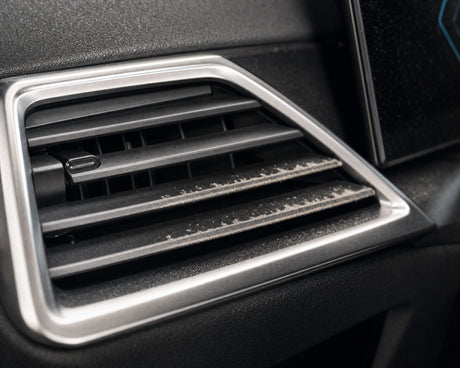
What the vac leaves behind, the cleaner lifts. Not the other way round.
FLEX
"VCE 33 L MC 230/CEE" Safety Vacuum Cleaner 30 L
30L Wet/Dry Vacuum Cleaner Filter Class L for Workshop and Detailing
FLEX
"VCE 33 M AC-Set 230/CEE" Safety Vacuum Cleaner 30 L
30L M-Class Safety Vacuum Cleaner with Auto Filter Cleaning


bigboi
XtractR Mini Extraction Vacuum


bigboi
XtractR / Extraction accessory set for "SuckR Pro"


Which vacuum suits car detailing? That comes down to the dirt: dry sand and dust, moisture in upholstery or fine sanding dust. Workshop vacuums, wet and dry vacuums and cordless models handle these jobs differently. Dust class L or M tells you what gets through the filter, not how hard the machine pulls.
Vacuum cleaners are detailing tools that use a hose, tank and filter to pick up dry dirt from carpets, floor mats and upholstery, plus liquids when approved for wet use. The range runs from 18 V cordless models to the workshop vacuum, a wet and dry machine with a tank measured in litres, and certified dust extractors. What mainly sets them apart from the car vacuum in handheld vacuum tests is where the motor, tank and filter sit.
Detailing1's tip from the shop: A crevice nozzle only picks up dirt that is already loose in air vents and seat seams. Brush through the vent slats first, holding the nozzle right behind the brush. The dust ends up in the vacuum instead of on the dashboard. The Koch-Chemie Interior Brush "Gelb" is an interior detailing brush. With the SONAX PROFILINE PinselSet, follow the intended use for each brush. After the first vacuuming pass over carpet, a compressed-air cleaning gun loosens dirt deeper down, ready for the vacuum to pick up.
A cordless handheld vacuum puts the motor, tank and filter in one hand. A workshop vacuum stays on the floor, with just the hose and nozzle coming into the car.
That layout explains most of the differences. A handheld is ready in seconds and reaches anywhere without a cable. Its tank is small: AUTO BILD criticised the smallest tank in its test for needing emptying partway through. With models powered by a 12 V socket, follow both the vacuum and vehicle manuals. There is no blanket answer to whether the engine should be running.
A workshop vacuum flips that arrangement. It is heavier and needs space beside the open door. In return, it holds sand from several floor mats, and a 3.5 to 4 metre FLEX accessory hose reaches from the boot to beneath the driver's seat. Wet and dry vacuums get their name from being able, when approved, to pick up liquids that a household vacuum cannot handle.
For a few crumbs after a drive, a handheld is still quicker to grab. A workshop vacuum comes into its own when the whole interior needs attention, sand is buried in the felt or liquids are involved.
Nozzle choice matters more inside a car than in a hallway. A crevice nozzle reaches seat rails and the gap beside the centre console; a wide nozzle covers carpets and floor mats. Pet hair is the exception. It catches across textile fibres, so suction alone will not pull it out. Loosen it with a rubber brush first, then vacuum it up.
The order of work stays the same whichever vacuum you use: vacuum before applying interior cleaner, because wet dust turns to mud. The guide Cleaning a car interior starts with the right order explains why. You will find all the equipment groups under cleaning equipment.
Dust class L, M or H describes how much fine dust a vacuum lets through. It says nothing about suction and applies to the tested machine as a whole.
Class L is the standard for ordinary dust. Class M lets fewer fine particles through than class L and also monitors airflow in the hose. Keep those two features separate when choosing: fine-particle retention and a warning when airflow falls.
The dividing line is documented. The DGUV, Germany's statutory accident insurance body, assigns paint particles to at least class M and advises paint shops to extract sanding dust rather than blow it away. Once you sand bodywork, M is the minimum. There is no blanket dust-class requirement for polishing dust alone, without sanding residue.
The hose matters when extracting directly from a sander, too. An antistatic hose dissipates the charge that fine dust builds as it moves through; Festool describes this for fine-dust extraction. For you, that means no static shocks at the handle while sanding. It is not a deciding factor when vacuuming floor mats.
For commercial work, the class forms part of the employer's obligations; for private use, it is a quality specification. Kärcher explicitly warns that fitting an M-class filter in an L-class machine does not make it an M-class machine. Class H is intended for carcinogenic dust. Our dust extractors page explains the differences in more detail.
Wattage only tells you how much electrical power a vacuum draws. Vacuum pressure and airflow together determine how well it pulls dirt from a carpet.
Germany's Umweltbundesamt describes suction power as airflow multiplied by vacuum pressure. Vacuum pressure, given in pascals, is what lifts sand from the fibres. Airflow, measured in litres per minute, carries it through the hose into the tank. When choosing, look at both together. One impressive figure on a data sheet does not tell you how clean your carpet will come out.
AUTO ZEITUNG notes that a high pascal figure alone does not guarantee better cleaning. Alongside vacuum pressure, AUTO BILD measures how much of a 100-gram dirt sample a machine picks up from a car carpet.
Two FLEX specifications show the range. The compact 18 V "VC 6 L MC 18.0" delivers 12,000 Pa and 1,400 l/min; the mains-powered "VCE 33 M AC-Set 230/CEE" dust extractor delivers 25,000 Pa and 4,500 l/min. These are manufacturer figures for different designs, not a direct comparison of cleaning performance on the same car carpet.
Filter cleaning is the second thing to look at. FLEX uses MC for manual air-pulse cleaning and AC for ongoing automatic cleaning. AC makes sense for fine sanding and polishing dust that quickly clogs a filter. MC is enough for sand from floor mats. Choosing mains or battery power means weighing setup speed against performance: the 18 V machine gets to the car faster, while the mains model offers higher vacuum pressure and airflow according to the FLEX figures above.
Power supply needs to fit where you work. A mains vacuum needs a socket within reach; a cordless vacuum works at the vehicle without a power cable. You will find the models and their runtimes under cordless vacuum cleaners. Start here by deciding which type suits your jobs.
The hose and connection also affect suction. FLEX uses 32 mm as standard; 32 and 38 mm are common in the specialist trade. Whether another manufacturer's nozzle fits depends on the coupling: bayonet, threaded or push-fit. Diameter alone is not enough. Check before buying more accessories.
According to their manuals, household vacuums are approved only for dry debris. Liquids need a wet and dry vacuum approved for wet pickup, with a float and the correct filter.
Kärcher gives three rules for wet use. Remove the filter bag from the tank. Let the wet filter dry before returning to dry pickup, otherwise damp dust will clog it. Never vacuum without a filter altogether, as dirt can reach the turbine. After wet use, leave the top section and filter open to dry so a musty smell cannot build up.
Approval for wet pickup does not mean approval for oil or every other liquid. Follow the particular machine's manual and do not vacuum flammable liquids. Use the brush attachment on upholstery: according to ADAC, hard nozzles can mark soft plastics and leather. Before wet-cleaning Alcantara, read Cleaning Alcantara without ruining the pile.
Evenness matters on seats. SONAX points out that unevenly damp seat foam dries unevenly and leaves water marks. Work across the whole seat panel up to the seam, not just the stain, then extract across the entire area.
After foam-cleaning a seat, the wet and dry vacuum pulls the cleaning solution from deeper down, as explained under fabric cleaners. Allow for drying time; it is part of the job. A wet and dry vacuum has no spray function: it extracts but does not rinse. Spray extraction cleaners spray solution into the fibres and pull it back out in the same pass.
The range follows two approaches: FLEX builds dust extractors around dust class and tool connection; bigboi offers a wet and dry vacuum for interior detailing with a spray extraction upgrade.
In the FLEX range, the "VCE 33 L MC 230/CEE" is a 30-litre class L machine. The "VCE 22 M MC V 230/CEE" has a power-tool socket with automatic start: switch on the sander and the vacuum starts too. The "VCE 33 M AC-Set 230/CEE" and "VCE 44 M AC-Set 230/CEE" clean their filters automatically as they work. That connects this range to polishers and sanders.
The 18 V "VC 6 L MC 18.0" and "VC 9 L MC 18 RC", plus the belt-worn "VC 2 L MC Hip 18.0-EC", are sold without a battery or charger. The VC 9 L MC 18 RC has a wireless remote control.
You wear the hip vacuum on a belt, leaving one hand for the nozzle and the other for a brush. All three use the FLEX 18 V battery platform shared with polishers and sanders. The battery systems page explains which batteries are compatible.
Check the data sheet for wet capacity. The "VC 21 L MC 230/CEE" holds 11 litres of liquid in a 20-litre tank, the "VCE 26 L MC 230/CEE" holds 16 litres in a 25-litre tank, and the "VCE 44 M AC-Set 230/CEE" holds 26 litres in a 42-litre tank, according to FLEX. Larger tanks matter when cleaning several vehicles in a row without stopping to empty them.
bigboi offers the SuckR Pro wet and dry vacuum, the XtractR extraction accessory set for "SuckR Pro" that converts it into a spray extractor, and the XtractR Mini extractor for spot cleaning. We leave out technical figures because the manufacturer's specifications vary by generation and market. In a motor-talk thread about the SuckR, one objection was that it was oversized for a normal passenger car. That holds for dry vacuuming alone, but not for wet-cleaning upholstery.
If you only need to remove crumbs, sand and dust from the interior, you do not need a new machine. A household or cordless vacuum with a crevice nozzle does the job while its filter and hose stay clear.
For occasional wet upholstery cleaning, a wet and dry vacuum is useful for extracting after foam cleaning. For regular, full-area cleaning of seats and carpets, look at spray extraction. If you rarely need it, renting a spray extractor is an option. Sanding bodywork calls for a class M dust extractor. If you want to work without a cable, see the options under cordless vacuum cleaners.
When setting up for detailing, plan the vacuum and compressed-air gun together. As AUTO ZEITUNG points out in its comparison, the gun does not vacuum: a cloth or vacuum still has to pick up the loosened dirt. You also need a compressor that can continuously supply the airflow the gun needs.
Bags and spare filters keep a vacuum ready for interior work. Some users find a workshop vacuum's hose stiff in a cramped footwell; workshop and handheld vacuums each have their strengths here. Filters and bags for the SuckR Pro are under vacuum cleaner accessories.
If suction fades after a while, check the air path before looking at the motor. Kärcher gives this order: replace the filter bag; clean the filter, nozzle, tube and hose; check the seals. A clear filter restores the suction a clogged one takes away. More watts will not fix that blockage.
Too much choice in Vacuum cleaners? Get help picking:
A household or cordless vacuum with a crevice nozzle is enough for everyday dry dirt. To extract liquid from upholstery, you need a machine approved for it. When sanding bodywork, a class M dust extractor is the minimum. According to heimwerker.de, cordless handheld vacuums run for eight to 30 minutes; mains-powered workshop vacuums have no such runtime limit.
No. Only machines approved for wet pickup can do that. Follow the instructions for the filter, filter bag and level shut-off. The filter must be dry again before dry vacuuming. Wet approval alone does not cover oil or any other liquid you might want to pick up; the machine needs explicit approval for that use. Do not vacuum flammable liquids.
For occasional seat cleaning, a wet and dry vacuum is enough: work the fabric cleaner into a foam, then extract the solution. A spray extractor sprays solution into the fibres and pulls it back out in the same pass, making sense for regular cleaning across the whole surface. If you rarely need one, you can rent a machine. See the types under spray extraction cleaners.
Vacuum when it needs it: visible sand, crumbs or pet hair on mats, seats and in the footwells are your cue. Follow the dirt rather than a fixed weekly schedule. Before wet-cleaning the interior, vacuum up loose dirt first. Then use the right cleaner for each surface.
Check the air path before the motor when suction drops. Kärcher gives this order: replace the filter bag; clean the filter, nozzle, tube and hose; check the seals. FLEX machines with MC cleaning use an air pulse to release dust from the filter, while AC machines do this automatically as they work. Filters and bags for the bigboi SuckR Pro are under vacuum cleaner accessories.
It depends on your location and where you vacuum. In Germany, for example, Vilshofen's Sunday rules explicitly cover car vacuums at car washes. Check your municipality's Sunday and public-holiday rules and the operator's permitted opening hours. At home, avoid disturbing others with noise and follow local quiet hours.
Daniel von Detailing1 |

Jasper von Detailing1 |

Daniel von Detailing1 |

Daniel von Detailing1 |

Daniel von Detailing1 |

Jasper von Detailing1 |

Jasper von Detailing1 |

Daniel von Detailing1 |

Daniel von Detailing1 |

Daniel von Detailing1 |

Daniel von Detailing1 |

Daniel von Detailing1 |


