Clean a Tesla screen: what the Model Y touchscreen can take
Daniel von Detailing1 |


Koch-Chemie
Metal Polish "Mep" Metal Polish 75 ml
Effective Metal Polish for Shine and Protection


SONAX
PROFILINE MetalPolish Metal Polish (Medium-Cut) 250ml
MetalPolish — Medium-Cut Metal Polish for High Gloss


Dr. Wack "P21S"
P21S "Metall-/ Alu-Polish" Metal Polish 100ml
Metal polish for alu, chrome and stainless — not for anodising


Meguiars
Metal Polish for Chrome, Aluminum & Stainless Steel, 6 oz (177 ml)

GYEON
Q²M MetalPolish Metal Polish 4 fl. oz.
Metal polish – chrome, stainless steel & aluminium back to high gloss
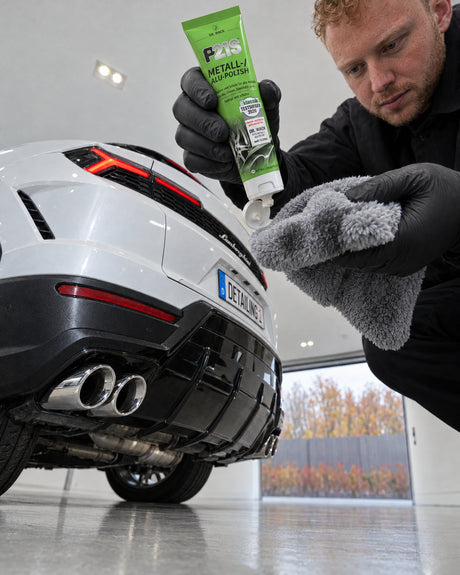
Dr. Wack P21S "Metall-/ Alu-Polish" takes the oxide off and leaves the metal.


Dr. Wack "S100"
"S100" metal polish for motorbikes 100ml
Essential high-gloss polish for motorcycle metal parts


CarPro
"MetalliCut" Metal-Polishing-Compound Metal Polish 150 ml
Fast and effective metal polish with a high-gloss finish
CarPro
"MetalliCut" Metal-Polishing-Compound Metal Polish 500 ml
Fast and effective metal polish with a high-gloss finish
D-CON
Chrome & Metal Polish Metal Politur 500ml
Chrome and metal polish for brilliant shine


Soft99
Brilliant, effective care of chrome parts made easy
What is the product designed for? Chrome polish helps you refresh suitable chrome-plated metal parts. What matters is the surface's actual construction, its condition and the uses approved for the individual product. Here you can compare three products, learn how their application differs and recognise when more polishing is no useful answer.
A chrome polish is a care product for working on chrome surfaces that are suitable for it. Depending on the product, it removes deposits and improves gloss with fine abrasives that mechanically work the existing surface. It does not create new chrome plating or replace a flaked layer. Suitability therefore depends on more than a silvery appearance: check the base material, any extra coating and the specific manufacturer's approval.

Detailing1's tip from the shop: Set out 2 clean microfibre cloths for hand polishing with Mep. Use one to apply a small amount; keep the second clean and soft for buffing. This keeps the stages separate; the number is a practical preparation tip, not a dose. Work with light pressure and check the result before treating another area.
Before polishing a shiny part, use reliable information to establish its base material, any additional coatings and the visible condition of the surface.
Chrome plating is a thin applied metal layer. Further layers and different base materials can sit underneath it. Plastic can be chrome plated too. That explains why two similarly shiny parts can have very different care instructions. The shine on a grille or window trim does not reliably reveal those differences. Information for the vehicle or the specific replacement part helps identify the construction.
Anodised aluminium trim is another important case. Anodising converts the aluminium surface into a protective oxide layer. The metal can still look shiny. Approval for chrome or bare aluminium therefore does not automatically include anodised finishes. Koch-Chemie expressly excludes anodised trim from Mep's uses; P21S is also described for non-anodised metals.
Check for clear coat, film or another additional surface as well. SONAX PROFILINE MetalPolish excludes coated metal parts. P21S, by contrast, explicitly allows use on painted metals with little pressure. You cannot replace that distinction with one blanket statement about all polishes. The combination of an identified part and the right product remains decisive.
If you do not know the construction, do not start with an aggressive test polish. A dark cloth does not prove you are working on the right surface. Identify the finish first, using the part description or asking the manufacturer, for example. A later test on an inconspicuous area complements an existing approval. It does not create permission to use the product on expressly excluded materials.
For choosing across different metals, see our metal polishes overview. Here the focus stays on suitable chrome-plated parts and their limits. This helps stop instructions for a bare aluminium component being quietly transferred to decorative trim. Identifying the surface alone can save needless work with the wrong product.
The right choice follows from the confirmed surface and your way of working; pack size or brand alone does not prove better suitability.
Koch-Chemie Metal Polish "Mep" is an option for the metal and chrome surfaces listed by its manufacturer when you want controlled work with a microfibre cloth. The 75 ml tube is easy to set out for individual care jobs. Work the product with light pressure, then buff with clean, soft microfibre. Do not choose it for aluminium or anodised trim.
SONAX PROFILINE MetalPolish is described as a high-gloss polish with medium abrasive action for tarnished aluminium, brass, chrome or stainless-steel surfaces. The 250 ml tube allows hand work as well as the specified machine application. Coated metal parts, rough metal surfaces and metallised plastic parts are excluded. More product does not mean broader approval or a fixed coverage per vehicle.
Dr. Wack P21S Metall-/Alu-Polish, in a 100 ml tube, draws its limits differently: the manufacturer lists painted and unpainted, non-anodised metals, including chrome. Use little pressure on painted metal. It specifies polishing cotton for rubbing the product in, meaning suitable cotton wadding as the applicator. Finish by wiping with a microfibre cloth. Chrome-plated plastics remain excluded.
If you want a chrome polish for your car, this material check matters more than a general ranking. The straightforward Mep hand application needs no machine settings. For a painted metal part, the separate P21S approval is relevant. If you want to machine-polish with SONAX, both the part and the application must be suitable. None of these individual features automatically makes a product best for every other job.
Even well-known tests help only within their scope. The AUTO BILD and ams/MOTORRAD comparisons assessed polishing performance on brushed aluminium. P21S did well there; that does not guarantee an advantage on your chrome-plated part. Some of the SONAX products tested were different, too. Use test results as background and the specific manufacturer's approval to decide for your surface.

A clean surface is easier to assess because loose dirt and stuck-on residue can otherwise hide the actual condition of chrome-plated parts.
Start with cleaning intended for the part in question. Remove loose dirt and take off cleaner residue according to that cleaner's instructions. Only then assess the surface. A polish is no reason to grind unknown dirt around under heavy pressure. Even a seemingly harmless spot does not immediately call for the strongest method available.
Inspect the cleaned area in good light. A remaining deposit on an intact surface is a different starting point from a flaking layer. Wanting more shine will not close exposed damage or visible pits. If you cannot identify what you are seeing, stop working. A clearly limited trial makes more sense than rubbing harder and harder.
Water marks, dull patches or dark spots do not by themselves tell you which product fits. With decorative trim in particular, knowing the exact finish matters. Successfully treating a similar-looking part in a video proves neither the same material nor the same coating. Do not take a before-and-after picture alone as approval for a product.
Set out the specified applicators clean. Microfibre cloths are part of Mep's manufacturer instructions; with P21S, polishing cotton and a microfibre cloth belong to different stages. Check that your cloths are clean and suitable for the task. A heavily loaded cloth is no useful yardstick for judging a freshly worked surface.
Only test an inconspicuous area once product and surface are a match. Follow the specific instructions and inspect the spot after removing residue. Unwanted changes in appearance are a reason to stop. A good result in one small corner justifies neither moving to excluded materials nor using arbitrarily more pressure elsewhere.
For application, match pressure, tools and finishing to the chosen product so that separate manufacturer instructions do not turn into one contradictory general method.
With Mep, put a little product on a microfibre cloth and work the suitable surface with light pressure. Then buff with a clean, soft microfibre cloth. No fixed number of seconds or surface area per drop is established for this. Keep your working sections manageable so you can see the application, residue and result clearly.
With P21S, shake the tube before use. Spread the product with the specified polishing cotton and use less pressure on painted metals. After allowing it to dry slightly, wipe with microfibre. If needed, treatment can be repeated according to the instructions. For an even appearance, the manufacturer recommends treating the whole continuous surface.
With SONAX, you can choose its approved hand application. For machine work, the manufacturer lists a medium foam pad or a lambswool pad at low speed. It does not give one universal rpm figure. Do not borrow settings from other product descriptions. If you cannot confidently machine-polish the part, hand application remains the easier of the approved options to keep track of.
A suitable cloth has a clear job when buffing: it removes the remaining residue so you can judge the worked surface. Find suitable polishing cloths in the relevant category. Their use still follows the product's instructions. The blanket claim that microfibre is always prohibited with metal polishes does not fit the manufacturer instructions presented here.
Follow the instructions on the current pack while working too. Avoid unnecessary skin and eye contact and use the specified ventilation and protective equipment. Store products according to their storage guidance. Missing hazard labels or a pleasant smell do not replace these instructions. Proper application needs no improvised blend of several polishes.

Once residue is removed, check gloss and evenness again before deciding whether further work makes sense and is provided for by the product's instructions.
A shiny patch can show that existing deposits came off. It does not automatically prove that every remaining mark can also be polished out. Judge the clean surface, not just the cloth or the still-wet polish. Compare connected areas under similar light. That makes it easier to tell whether a difference comes from application or lasting damage.
If chrome plating is missing, the product cannot replace it. Applying new chrome requires a separate plating process. That remains true even if you can make the edge of a damaged area shine more. For flaking areas or open pits, a professional assessment is the sensible next step, rather than more and more polish.
Black or grey residue on an applicator is no reliable material test either. Its colour alone does not tell you whether you are looking only at dirt, a surface change or part of the finish being worked. You still need confirmed material information to decide the right application. The cloth's colour cannot replace that information.
If unwanted changes appear after correct application, do not spontaneously switch to stronger tools. Steel wool, improvised foil methods or a higher machine speed are no general answer to unidentified damage. Tips from individual experience reports carry no approval for your part. Pause and establish which surface you are actually trying to preserve.
These limits make choosing a chrome polish easier to understand. You know beforehand whether you are maintaining intact material or need a repair. On suitable surfaces, the work can refresh the appearance. Promising complete removal of every scratch or rust spot would not be a reliable expectation across the different parts discussed here.
After polishing, plan further care around use, dirt and manufacturer instructions instead of assuming one polishing interval or protection duration for all chrome parts.
After normal cleaning, first check whether another polish is needed at all. Simply wanting more shine is no reason to mechanically work an intact surface at every wash. Any extra care depends on the part and the product intended for it. Applying a polish does not give blanket approval for any sealant afterwards.
Depending on the product, manufacturers also describe a protective or repellent effect. That does not establish a shared duration in weeks or months for these three products. Use and cleaning also differ between a sheltered decorative part and a heavily exposed exterior area. Do not expect a fixed maintenance-free period; check the actual condition.
Matching the material matters just as much on a motorcycle as on a car. A part's location or similar appearance does not automatically make a polish suitable. The metal polishes for motorcycles overview shows the relevant range. Keep following each product's material and application instructions instead of transferring a demonstrated exhaust treatment to every neighbouring part.
For a different, clearly identified surface problem, specialist polishes can help you find your way. Categories group possible tasks; they do not replace checking the specific product. Paint, anodising or a metallised plastic surface can change the choice completely. Establish those details before combining more products.
Choose your chrome polish in a simple order: known surface, suitable condition, explicit approval and clear application. Mep, SONAX PROFILINE and P21S offer different options. Keeping them separate lets you buy and work with purpose, without relying on a supposedly universal answer. Missing or damaged plating marks a clear limit to care advice.

Too much choice in Chrome polish? Get help picking:
Add Detailing1 as a preferred source on GoogleChrome polish is a product for working on chrome surfaces that are suitable for it. Depending on the product, it removes deposits and improves gloss with fine abrasives. It does not create new chrome plating or repair a flaked coating. Suitability depends on the actual part, its condition and the specific manufacturer's approval.
First use cleaning intended for the specific part and remove its residue as instructed. Then inspect the clean surface in good light. Only test polish on an inconspicuous area once the material is known and suitable. Loose dirt, a flaking layer or unknown surface construction is no reason to rub harder.
Koch-Chemie Mep, SONAX PROFILINE MetalPolish or Dr. Wack P21S Metall-/Alu-Polish are examples for expressly suitable surfaces. Their approvals and tools differ: Mep calls for microfibre and light pressure, P21S for polishing cotton to rub it in. SONAX also allows the specified machine application. Choose by material and instructions, not a test result alone.
No. Shine reveals neither the base material nor additional coatings. Mep excludes aluminium and anodised trim; SONAX PROFILINE excludes, among other things, metallised plastics and coated metal parts. P21S is described for certain painted and unpainted, non-anodised metals, but not chrome-plated plastic. Identify the trim's actual construction first.
A polish can work the existing surface, but cannot rebuild missing chrome plating. Flaked areas and open pits are therefore a different job from removing a deposit. Do not simply increase pressure or speed on such damage. Have the condition and possible repair assessed by the part manufacturer or a specialist.
Check suitability and current pack instructions first. Put a little Mep on a microfibre cloth and work the approved part with light pressure. Buff with a clean, soft microfibre cloth and check the surface. No fixed working time is specified. Do not use this product on aluminium or anodised trim.
Check that the part has a suitable, intact chrome-plated metal surface. Do not use Mep on aluminium or anodised trim. For unknown coatings, flaking layers or exposed damage, first establish suitability with the part or vehicle manufacturer.
Clean the part using a suitable method and remove cleaner residue as instructed. Inspect the surface in good light. Set out clean microfibre cloths and follow current pack instructions on application, ventilation and personal protection.
Put a little Mep on a microfibre cloth. Start on an inconspicuous spot of the approved material and work with light pressure. Do not borrow fixed times in seconds, doses or machine settings from other products.
Buff the worked spot with a clean, soft microfibre cloth. Use a clean section of the cloth or a separate cloth. Remove residue so you can judge the actual result.
Check gloss and evenness on the clean surface. Stop working if unwanted changes appear. More polish cannot replace missing chrome layers. Treat further suitable areas only as the product instructions describe.
Daniel von Detailing1 |

Daniel von Detailing1 |

Daniel von Detailing1 |

Daniel von Detailing1 |

Daniel von Detailing1 |


Daniel von Detailing1 |

Daniel von Detailing1 |

Daniel von Detailing1 |

Daniel von Detailing1 |

Daniel von Detailing1 |

Daniel von Detailing1 |